
Digital Recruiting: A Guide to Smarter Talent Acquisition
Learn how digital recruiting improves sourcing, communication, screening, and hiring, and see how TextUs helps teams connect with candidates faster.

Written by
Adam Hamdan
Published
September 28, 2026

In the digital marketing space, candidates move between multiple channels throughout the hiring journey. Therefore, you need more than a few online job postings to compete for attention.
Digital recruiting brings channels and technologies together across candidate attraction, sourcing, engagement, screening, interviewing, hiring, and measurement.
Instead of treating each stage as a separate task, it creates a connected experience. It helps you communicate with candidates, evaluate fit, and track what drives better hiring results.
In this article, you’ll learn how digital recruitment improves hiring, which tools support it, which strategies attract candidates, and how to build an effective digital recruiting strategy.
TL;DR
- Digital recruitment modernizes talent acquisition by expanding candidate reach, speeding up communication, reducing manual work, strengthening employer visibility, and improving decisions with data.
- Digital recruiting technology connects applicant tracking, candidate engagement, sourcing, assessment, interview, artificial intelligence, customer relationship management, and analytics systems into a more organized hiring workflow.
- An effective digital recruiting strategy connects goals, technology, candidate communication, automation, data governance, and ongoing measurement into a more organized hiring process.
- Digital recruiting best practices include targeted outreach, mobile-friendly experiences, skills-based screening, SMS communication, and re-engaging past candidates.
- TextUs helps you stay connected with candidates through faster texting, automated follow-ups, and recruiting system integrations.
What is Digital Recruiting?
Digital recruiting is the use of online channels, technology, automation, and data to attract, communicate, evaluate, and hire candidates.
It brings digital tools into the recruitment process, from promoting open roles and sourcing talent to scheduling interviews, communicating with applicants, and tracking results.
Unlike traditional recruiting, digital recruitment reaches job seekers across career sites, job boards, social platforms, search engines, email, text marketing, and recruiting software.
How Digital Recruitment Modernizes Talent Acquisition
Professionals research employers, compare opportunities, read reviews, browse social platforms, and complete much of their job search online.
Below are the main ways digital recruitment helps you adapt to these changes:
Expands Access to More Job Seekers
Digital channels make it easier to reach potential candidates beyond traditional job boards or local networks.
Social media, career sites, talent databases, and targeted outreach connect you with people who may not have found the role through conventional recruiting methods.
A broader reach also creates more choices when you need people with specific skills or experience.
Better targeting keeps attention on passive candidates who fit the role instead of simply increasing application volume.
Makes Candidate Communication Faster
Long gaps between applications, interviews, and hiring decisions can cause candidates to lose interest.
Digital recruiting connects email, SMS, scheduling tools, and recruiting platforms so clear communication remains part of each stage.
Timely updates also make it easier to engage candidates after the first conversation. Interview reminders, status updates, follow-ups, and answers to candidate questions keep the relationship active throughout the process.
Reduces Repetitive Recruiting Tasks
Recruiting includes administrative work such as interview scheduling, application updates, reminders, candidate records, and reporting.
Digital recruitment reduces time-consuming tasks through automation and connected systems without removing the human side of hiring.
Less manual work leaves more room for conversations, evaluations, and hiring decisions that require personal judgment. Technology also keeps information organized as candidates move through the hiring cycle.
Strengthens Employer Visibility
Candidates research a company before they submit an application or respond to outreach.
A strong digital presence across career pages, social platforms, employee content, and review sites helps them understand the company before they enter the recruiting process.
Consistent employer messaging also creates a competitive advantage when several companies pursue similar talent. Candidates get a better sense of the role, workplace, and expectations before deciding.
Improves Recruiting Decisions With Data
Digital recruitment creates data across sourcing, applications, interviews, offers, and hires.
You can see which channels attract qualified candidates, where people leave the process, and which sources lead to better hiring outcomes.
Those insights make it easier to refine recruiting efforts instead of relying on application volume alone. Over time, hiring data guides channel selection, communication changes, and resource decisions.
Digital Recruiting Tools and Technology
Technology connects the different stages of digital recruiting. Here are the main types of recruiting technology that support a more integrated workflow.
Applicant Tracking Systems
An applicant tracking system (ATS) stores candidate records and tracks applicants as they move from initial interest to a hiring decision.
It can manage applications, interview feedback, hiring stages, documents, and communication history in a central system.
A well-structured ATS also makes the application process easier to track. You see where candidates are progressing, where delays occur, and which stages cause people to leave before completing the process.
Candidate Engagement Tools
Candidate communication tools help you stay connected with applicants throughout the recruiting journey, but each channel fits a different type of conversation.
Email is suited to longer updates and documents. Chatbots and candidate portals can handle common questions, application updates, and basic self-service tasks.
SMS marketing is valuable for time-sensitive conversations. Candidates tend to see and respond to texts faster than email.
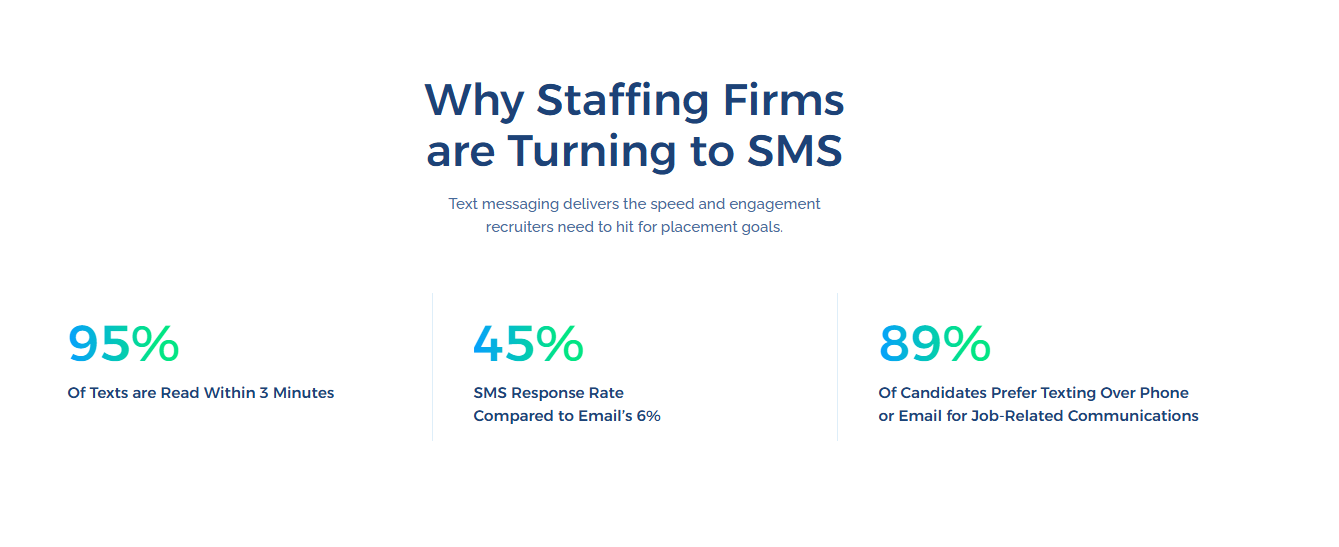
Also, 89% of candidates prefer text messaging over phone or email for job-related communication. This makes texting a practical option for reminders, status updates, scheduling, and quick follow-ups.
With text recruiting software, you can reach candidates faster, automate routine follow-ups, and keep communication organized throughout the hiring process. Book a demo with TextUs today!
Recruitment CRM Platforms
Recruitment CRM software focuses on relationships with people who may not have an active application.
It can organize talent pools, segment contacts, track previous conversations, and support follow-up campaigns for future openings.
This type of platform is valuable when hiring depends on long-term candidate relationships. Previous applicants, referrals, and passive prospects remain accessible instead of disappearing once a role closes.
AI Recruiting Tools
AI in recruitment assists with candidate sourcing, matching, screening, outreach, scheduling, and data analysis.
Automation can also handle routine activities such as confirmations, reminders, status updates, and interview coordination.
Your team's AI readiness needs to come before broad adoption. Reliable candidate data, defined processes, human review, and internal rules help ensure AI supports hiring decisions.
Candidate Sourcing and Talent Intelligence Platforms
Sourcing technology helps you identify people beyond incoming applications. Search filters, candidate databases, skills matching, talent mapping, and market data make specialized searches more focused.
These platforms allow companies to locate the right talent when suitable applicants are difficult to find through inbound recruiting alone.
Talent intelligence also provides information about candidate availability, skills markets, locations, and sourcing patterns.
Candidate Assessment Platforms
Digital assessments give you another way to evaluate the best talent beyond resumes and previous job titles.
Skills tests, technical exercises, work samples, structured questions, and role-specific assessments can provide more evidence about a person's ability to perform the work.
Assessments can also provide structured information about how a candidate approaches job-related tasks and working conditions. No assessment can guarantee a perfect match, so results should be reviewed alongside interviews, work samples, and other role-based evidence.
Interview and Scheduling Tools
Scheduling tools reduce the back-and-forth that often slows down candidate coordination.
Self-scheduling links, calendar integrations, automated reminders, and simple rescheduling options make it easier for candidates and interviewers to find a time that works.
Video interviewing platforms also support live or recorded interviews, while interview panels and shared feedback tools keep evaluations organized after each conversation.
Recruitment Analytics Tools
Recruitment analytics tools turn sourcing, application, interview, offer, and hiring data into information that can guide future decisions.
Source quality, response rates, conversion rates, hiring speed, and offer acceptance can reveal where the process needs attention.
Reporting also helps you understand which recruiting technology contributes to actual hiring outcomes. High application numbers mean less when those applicants rarely progress to interviews or offers.
How to Build an Effective Digital Recruiting Strategy
A digital recruiting strategy gives you a structured way to connect people, technology, communication, and hiring goals. This is how you can build a strategy that fits your organization:
Step #1: Audit Your Current Recruiting Process
You need to map the full funnel from sourcing and first contact through screening, interviews, offers, and hires so you can see where delays or unnecessary work occur.
Look for candidate drop-off, slow response times, duplicate systems, weak sourcing channels, missing data, and tasks that require repeated manual effort.
This audit also gives talent acquisition (TA) leaders a baseline for deciding which problems need process changes and which ones may require new technology.
Step #2: Set Digital Recruiting Goals
Your goals should connect digital recruitment activity to measurable hiring outcomes.
Common priorities include reducing time to hire, improving candidate response rates, increasing qualified applications, reaching passive talent, reducing application abandonment, and improving interview attendance.
Source-to-hire rates, cost per hire, offer acceptance, and talent pipeline growth can also provide useful targets. Defined goals make it easier to decide where to invest instead of adding unnecessary tools.
Step #3: Map the Candidate Journey
The candidate interaction begins before someone submits an application.
A person may first encounter your employer brand through social media, a career page, employee content, search results, referrals, or recruitment advertising.
You have to document each touchpoint through application, screening, interviews, offers, and onboarding.
The map should show which channels serve different candidate groups, what information people receive at each stage, and where technology creates unnecessary barriers.
Step #4: Connect Your Recruiting Technology Stack
An ATS may manage applications while a recruitment CRM handles talent relationships. Messaging software manages outreach, and scheduling platforms support later stages.
HRIS and analytics systems may hold additional employee and performance data after a hire takes place.
These systems create more value when information moves between them instead of sitting in separate databases.
Connected technology reduces duplicate work, preserves candidate history, and gives your business a better view of each person's progress through the funnel.
Step #5: Build Candidate Communication Workflows
Faster communication helps you stay visible, respond to questions sooner, and keep promising candidates moving before interest drops.
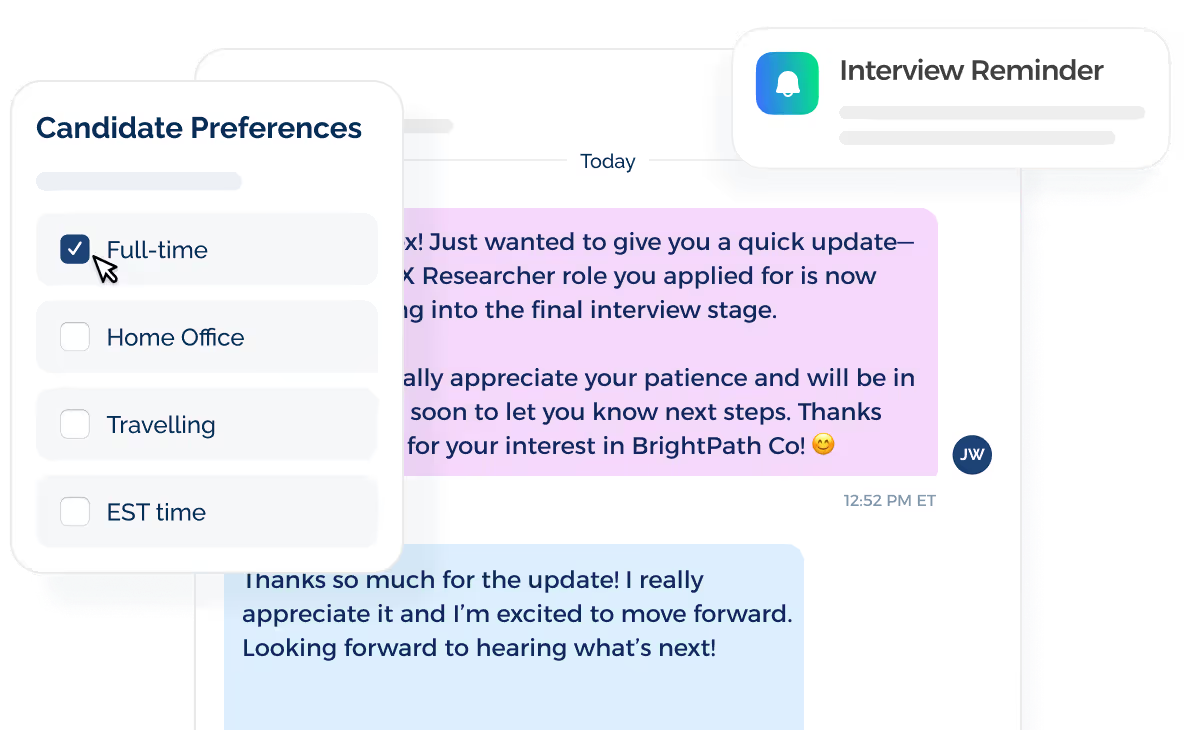
You can build a recruiting workflow around key candidate touchpoints, including:
- Initial outreach
- Application confirmations
- Screening updates
- Interview invitations
- Status changes
- Rejection messages
- Future opportunity alerts
Consistent communication reduces uncertainty for candidates while giving you a repeatable process that doesn't depend on remembering every follow-up by hand.
Using a text automation software makes this process easier to manage. Drip campaigns are valuable for reminders, talent-pool nurturing, and re-engagement.
Step #6: Decide What to Automate and What Needs Human Interaction
Automation is best suited to repetitive tasks such as confirmations, reminders, scheduling, workflow updates, and routine follow-ups. These tasks can take significant time without requiring much judgment.
Personal responses remain important when candidates ask detailed questions, discuss compensation, raise concerns, or reach sensitive stages of the recruitment process.
A cost-effective approach combines automation with human conversation instead of treating every candidate interaction the same way.
Step #7: Establish Recruiting Data and AI Governance
Candidate data requires defined rules around access, storage, retention, system permissions, and approved technology.
If you're using AI, you should also decide how automated recommendations are reviewed, who remains accountable for decisions, and what audit records need to be maintained.
Governance becomes more important as AI enters sourcing, screening, matching, and communication workflows. Human review helps prevent technology from becoming the sole basis for decisions.
Step #8: Launch, Measure, and Refine the Strategy
Digital recruitment doesn't end when new technology goes live.
Results should be reviewed across sourcing, candidate engagement, interview attendance, hiring speed, conversion rates, costs, and final hiring outcomes.
SMS performance can be measured alongside your recruiting funnel through response rates, delivery trends, interview confirmations, re-engagement rates, and candidate progression.
A strong digital recruiting strategy creates a competitive edge through better data, stronger candidate relationships, and faster hiring.
Recruiting Best Practices for Attracting and Hiring Candidates
A successful digital recruiting strategy combines the channels, technology, and communication methods that connect you with people throughout the hiring journey.
Here are a few strategies that help you attract stronger applicants and move them through the recruitment process:
Define Your Ideal Candidate
A focused talent strategy starts with a clear profile of the people you need to hire.
Role responsibilities, experience level, location, work preferences, and required skills can guide where you search and how you approach candidates.
Hiring criteria should reflect the role and industry. For example, employers recruiting in the digital marketing space may look for experience with paid media, content, analytics, SEO, or marketing automation.
A general candidate profile will not account for the specific skills required across these specialties.
Each role may also have different specific hiring needs, so the same recruiting approach will not fit every opening.
Better targeting helps you spend less time sorting through poor-fit applications and more time connecting with the right candidates.
Use SMS as Part of Your Digital Recruitment Strategy
SMS adds a direct communication channel for interview reminders, scheduling updates, application follow-ups, and candidate questions.
Texting also keeps conversations accessible when many candidates may not check email often enough to respond within a short hiring window.
TextUs brings two-way texting into your recruiting workflow to ensure conversations don't have to live on personal phones or across disconnected message threads.
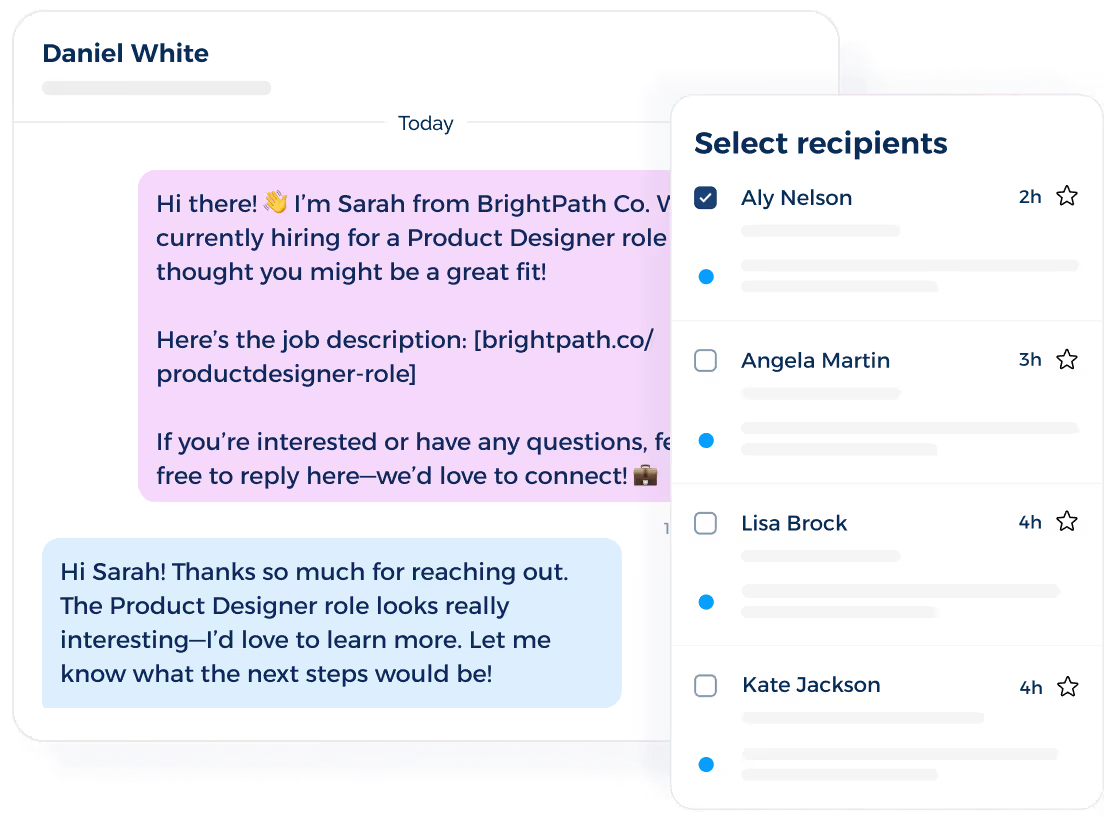
You can manage incoming messages from a shared inbox, review conversation history, assign conversations to colleagues, and receive notifications when candidates respond.
TextUs also connects with ATS, so contact records, notes, and message history stay tied to existing recruiting workflows.
You'll spend less time switching between tools or managing conversations from personal phones, while candidate activity stays easier to track.
Book a demo with TextUs today and see how it can strengthen candidate communication and support faster placements!
Personalize Candidate Outreach
Generic recruiting messages are easy to ignore, especially when experienced candidates receive frequent outreach.
Messages become more relevant when they reference the person's background, explain why the opportunity may fit, and provide enough information for them to decide.
Personalization doesn’t require writing every message from scratch.
Recruiting templates can provide structure, while details about experience, interests, location, or career goals make outreach more relevant to top talent.
Create a Mobile-Friendly Candidate Experience
Candidates may discover a role, read the job description, communicate with a recruiter, schedule an interview, and complete parts of an application from a phone.
Long forms, difficult document uploads, and desktop-only pages can create unnecessary drop-off.
A mobile-friendly process becomes even more valuable when hiring across locations or for remote work opportunities. Candidates should be able to complete important recruitment steps without dealing with difficult forms, uploads, or device restrictions.
Use Skills-Based Screening
Resumes and job titles don't always show whether someone can perform the work.
Structured screening questions, skills assessments, work samples, and consistent interview criteria can help you assess candidates against the requirements of the role.
This approach keeps the focus on demonstrated ability rather than broad assumptions about previous employers or education. It can also help surface the most qualified candidates from a larger applicant pool.
Re-engage Previous Candidates
Past applicants, former finalists, previous contractors, and people already in your talent database are valuable sources for future openings.
These candidates already know your company and may require less introduction.
A recruitment CRM or ATS can segment previous candidates by role, experience, location, or prior hiring stage so outreach stays relevant.
Personalized follow-ups about new opportunities bring top candidates back into the pipeline and reduce the need to restart every search from scratch.
Make SMS Your Placement-Driving Channel With TextUs
Recruiting teams manage candidate communication across roles, locations, and hiring stages. A digital marketing recruitment agency may also coordinate searches for several clients, each with different deadlines, candidate requirements, and communication preferences.
TextUs keeps candidate messaging connected across campaigns, direct conversations, and follow-up activity. Candidate history stays connected, follow-ups require less manual effort, and you have more context when conversations continue.
Faster back-and-forth can keep candidates engaged, reduce delays, and support higher placement rates when hiring demand moves fast.
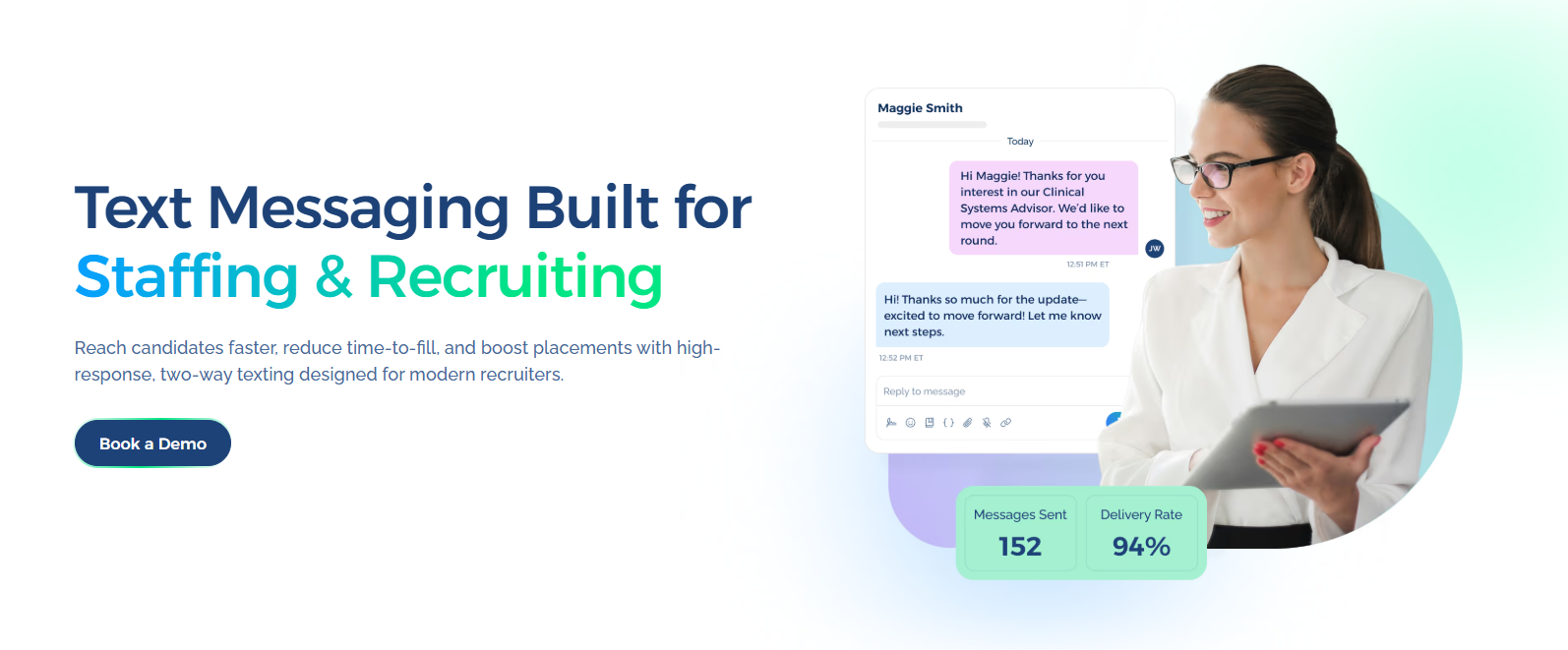
Book a demo with TextUs today and see how it can turn more candidate conversations into placements!
FAQs About Digital Recruiting
What is digital recruiting?
Digital recruiting uses online platforms, software, automation, and data to attract, engage, assess, and hire candidates.
It can include career sites, social media, job ads, ATS, SMS, email, assessments, and recruiting analytics.
How to tell if a recruiter is scamming you?
Common warning signs include requests for money, pressure to share sensitive information too early, communication from suspicious email addresses, or job offers without a real interview.
A legitimate recruiter should be able to explain the role, company, and industry they represent without avoiding basic questions.
Is a virtual recruiter a real person?
A virtual recruiter may be a person who works remotely, or the term may refer to software that handles parts of the recruiting process.
Digital marketing recruiters and those in other specialties may work virtually, but their job focus is separate from how or where they work. Ask whether you are communicating with a person, an automated assistant, or both.
What are red flags recruiters should review?
Recruiters should review discrepancies that are directly related to the role, such as conflicting employment dates, unverifiable credentials, or materially inconsistent answers.
Employment gaps, job changes, and communication style should not automatically count against a candidate. Ask neutral follow-up questions and apply the same job-related criteria to every applicant.
Continue Reading



Frequently Asked Questions
Business Texting
Built for Results
Create and convert pipeline at scale through industry leading SMS software