
Healthcare Staffing Technology: A Workforce Efficiency Guide
Learn how healthcare staffing technology works and explore its use cases. Discover how TextUs can help you use SMS for healthcare communication.

Written by
Adam Hamdan
Published
October 20, 2026

Healthcare staffing involves more than finding qualified professionals. Every open role, schedule change, credential update, and staffing request depends on fast decisions and collaboration.
Technology helps bring structure to that complexity through connected tools for recruiting, workforce planning, scheduling, data management, and staffing coordination.
The right setup can help teams respond faster, reduce process gaps, and keep workforce activity moving with fewer disruptions.
In this article, you’ll learn where technology fits into staffing, which parts of the workforce process it can improve, and how to modernize your current setup.
You’ll also see where text messaging fits into daily outreach among healthcare teams.
TL;DR
- Staffing technology connects workforce data, automates routine tasks, and supports better coordination throughout the hiring and staffing process.
- Healthcare staffing technology supports the full lifecycle by improving communication, sourcing and screening, credentialing, onboarding, scheduling, assignment management, payroll, billing, and workforce forecasting.
- Modernizing healthcare workforce solutions means aligning technology with your staffing model, processes, data, healthcare-specific needs, integrations, candidate communication, security requirements, and post-launch performance.
- SMS simplifies healthcare staffing by speeding candidate outreach, supporting shift coverage, automating follow-ups, enabling two-way conversations, improving team visibility, and connecting messaging with ATS systems.
- TextUs helps healthcare teams handle shift coverage, patient outreach, and staff coordination through reliable, two-way texting.
How Technology Supports Healthcare Professionals
According to ACHE, workforce challenges ranked as the second most pressing issue for community hospital CEOs.
Among industry concerns, 73% cited burnout among clinical workers, 73% reported technician shortages, and 68% reported shortages of physician specialists.
These challenges extend far beyond filling open positions. Healthcare staffing agencies also manage credentials, availability, schedules, and communication during multiple stages of the workforce cycle.
Staffing technology brings more of that information into connected systems. Recruiters and workforce leaders gain a better view of open roles, candidate status, and tasks that still require attention.
Automation also reduces the amount of routine administrative work tied to staffing. Reminders, document requests, and follow-ups move forward without taking as much time away from recruiter conversations.
A stronger technology setup brings workforce data and communication closer together. Organizations gain better coordination, while candidates receive the information they need to respond.
Use Cases of Healthcare Staffing Technology
Healthcare staffing technology supports each stage from candidate discovery through placement, scheduling, and redeployment.
A connected system reduces handoff gaps within the recruiting process and keeps candidate information accessible as work moves forward.
Candidate and Workforce Communication
Communication plays a central role in staffing operations. Technology supports this process through email, mobile apps, in-platform notifications, chat tools, and messaging systems.
The right mix depends on the urgency of the message, the type of update, and how your workforce prefers to communicate.
Text marketing is valuable for time-sensitive outreach when phone calls may not get an immediate response.
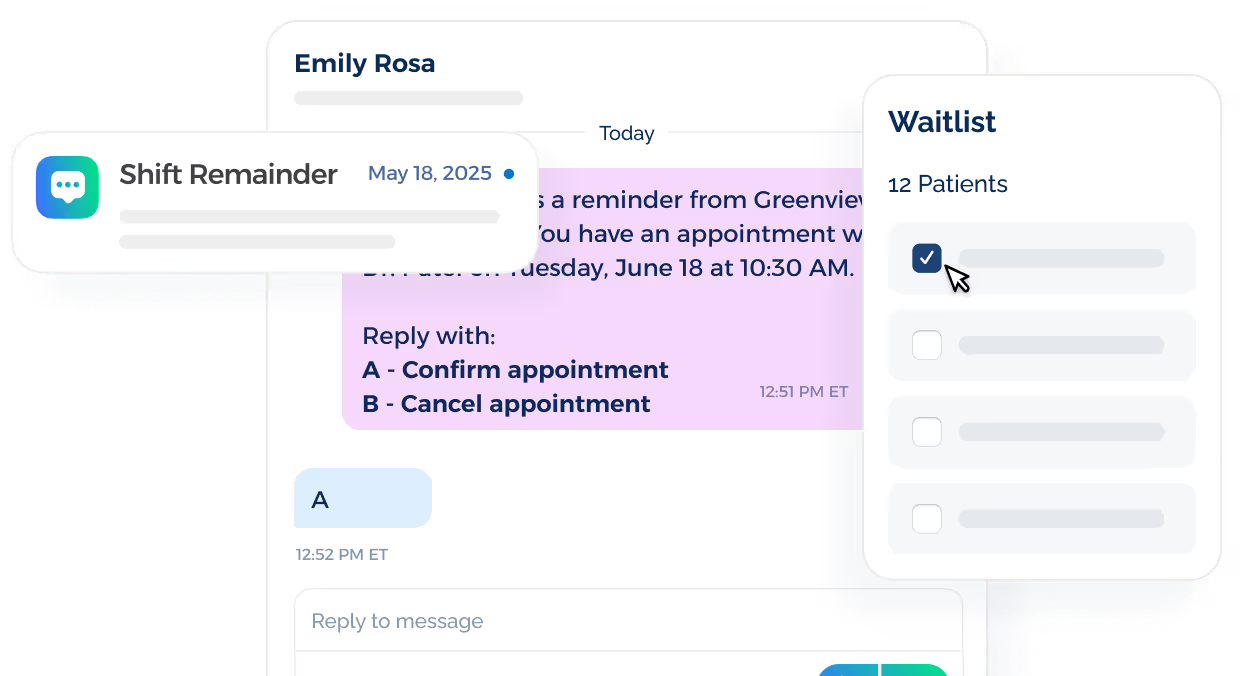
It works best for job opportunities, interview coordination, credential reminders, availability checks, shift alerts, and assignment updates.
Two-way texting also turns a notification into a conversation. A candidate can confirm availability, ask a question, or respond to a recruiter from the same message thread.
Book a demo with TextUs today to explore how texting keeps recruiting conversations, staffing updates, and candidate follow-up connected in a single platform!
Candidate Sourcing and Matching
Recruiters work with large talent pools spanning specialties, locations, and availability requirements.
Search tools and AI matching narrow those pools based on role criteria and candidate experience.
Past applicants and previous placements can also return to consideration when new opportunities open. This gives you more ways to identify qualified talent before starting a new search.
Applicant Tracking and Screening
Applicant tracking systems (ATS) organize applications, resumes, interview notes, qualifications, and candidate status in one record.
Structured screening also keeps evaluation criteria consistent for similar roles. Recruiters can see which candidates meet requirements and which still need review before moving forward.
Credentialing and Compliance
Healthcare placements often depend on licenses, certifications, background checks, and other role-specific requirements.
Credentialing platforms centralize these records and flag missing or expiring documents. Teams gain a clearer view of placement readiness before assignment dates approach.
Digital Onboarding
Digital onboarding brings forms, agreements, training requirements, and document collection into one process.
New medical staff can complete required steps online, while recruiters see which paperwork remains unfinished. Automated reminders also reduce repeated follow-up before a start date.
Scheduling and Workforce Coordination
Scheduling tools connect worker availability with open shifts, assignments, and location requirements at clinics and nursing homes.
You'll gain a current view of coverage needs and upcoming gaps. Mobile notifications can also alert employees about schedule changes or new opportunities that require a response.
Assignment Management and Redeployment
Placement doesn’t end the relationship with a worker.
Assignment tools track contract dates, milestones, extensions, and upcoming completion dates. You may then identify workers who may be available for another opportunity before their current assignment ends.
Timekeeping, Payroll, and Billing
Time and attendance systems capture worked hours, overtime, shift rates, and other compensation details.
Connections with payroll and billing tools reduce duplicate entry and keep staffing records aligned with approved hours and financial data.
Workforce Analytics and Forecasting
Staffing data gives leaders a better view of demand, coverage, recruiter activity, and workforce availability.
Historical patterns can also reveal recurring gaps or seasonal changes. Those insights support earlier planning instead of waiting until staffing needs become urgent.
8 Steps to Modernize Your Healthcare Workforce Solutions
The right technology depends on how your staffing model operates, where delays happen, and which tools are already in place.
Here are the main areas to review before you choose a platform and put it into practice.
Step #1: Start With Your Healthcare Staffing Model
Requirements depend on the roles you place, assignment types, locations, and hiring volume.
A permanent recruitment team may prioritize applicant tracking and candidate engagement. A travel or per diem model may need stronger scheduling, credential tracking, and shift communication.
Your current process offers the best starting point for comparison. A mapped path from open role to placement shows which features support your staffing strategy.
Step #2: Map Your Current Processes
Your existing workflows reveal where the new technology needs to fit.
A process map shows how information moves between recruitment, credentialing, scheduling, communication, and assignment management. It can also expose duplicate steps, manual handoffs, or areas where information gets delayed.
This review keeps the rollout focused on actual process needs instead of software features alone.
Step #3: Prepare and Clean Your Data
Poor data may create problems before users even start working in the new system. A cleaner dataset gives users a stronger starting point after launch.
Candidate records, contact details, credentials, job information, and assignment history should be reviewed before migration. Duplicate or outdated records may slow progress once that information moves into a new platform.
Step #4: Look for Healthcare-Specific Features
General recruitment software may not support the requirements involved in healthcare facilities.
A healthcare-focused platform includes credential tracking, license expiration alerts, role-based screening, shift scheduling, automated reminders, mobile access, reporting, and assignment tracking.
But the strongest fit supports the workflows your team handles most often.
TextUs brings SMS recruiting capabilities into one HIPAA-compliant texting app, with tools for real-time texting, smart AI automation, shared visibility, and connected candidate outreach.
Book a demo with TextUs to see how business texting can support your healthcare staffing process!
Step #5: Check Integration With Your Existing Tech Stack
New technology should fit into the healthcare systems already central to your recruitment process.
Connections with your ATS, CRM, credentialing tools, payroll systems, scheduling software, and communication platforms reduce duplicate entry.
Integrated data also gives users more context without forcing them to switch between several disconnected records.
Step #6: Evaluate Candidate Communication Capabilities
You need a fast way to reach candidates throughout the hiring and assignment cycle.
Strong communication features may include one-to-one messaging, automated follow-ups, templates, shared inboxes, scheduled outreach, and conversation history.
Shared records also give other team members context before they respond. This reduces fragmented follow-up when several recruiters interact with the same candidate.
Step #7: Review Data Security, Privacy, and Compliance
Staffing platforms can store personal, employment, credential, and payment information.
A security review should cover encryption, authentication, user permissions, data storage, and audit logs. Access levels should also match each person's role so sensitive information stays restricted.
Compliance controls, opt-out management, and delivery reporting also matter when outreach happens at scale. These features support stronger oversight without making communication harder to manage.
Step #8: Track Adoption and Performance After Launch
A successful launch doesn't guarantee long-term value.
Usage data, response rates, placement speed, credential completion, and staffing coverage can show whether the system supports the goals set at the start.
User feedback also reveals where processes remain difficult or where additional training is needed. Regular reviews provide your team a chance to refine the setup as staffing needs change.
How SMS Marketing Simplifies Healthcare Communication
Staffing systems may organize schedules, credentials, and candidate records. However, communication still affects how fast people respond.
SMS for recruiting adds a direct communication layer that keeps updates, reminders, and staffing requests closer to the people who need them.
Reach Candidates Faster During Time-Sensitive Staffing
Staffing involves decisions that cannot sit in an inbox for hours, especially when sourcing nurses, doctors, or allied health professionals.
Text messages give you a direct way to send interview updates, open-role alerts, availability requests, and assignment details to candidates with the right expertise.
Candidates and workers can respond in the same conversation, reducing delays caused by missed calls or long email threads.
Support Shift Coverage and Schedule Communication
Open shifts and last-minute schedule changes require fast coordination.
For example, bulk text messaging lets you notify available occupational therapists or medical assistants about new openings or coverage needs without contacting each person one at a time.
They can confirm availability through text, which provides staffing teams with a faster view of coverage and supports consistent service delivery.
Reduce Repetitive Follow-Up
Many staffing updates follow the same pattern for different candidates and workers.
Automated messages cover interview reminders, credential deadlines, onboarding steps, start dates, and assignment check-ins.
You spend less time on repeat outreach and more effort on conversations that need personal support.
Keep Two-Way Communication Open
Staffing communication competes with crowded inboxes, voicemail, and multiple internal systems. SMS is a dedicated channel that candidates and workers can check from their phones.
Short messages also make the required next step easier to understand, whether that means confirming a shift, submitting a document, discussing pay, or replying to a recruiter.
Provide Shared Conversation Visibility
An SMS marketing platform keeps conversations in a shared workspace. Another team member may continue a conversation without asking the candidate to repeat previous details.
Shared visibility also supports smoother handoffs when responsibilities change between recruiters, schedulers, or departments. It helps address gaps before they affect staffing quality.
Connect Messaging With Staffing Systems
Connections with recruiting, scheduling, and workforce platforms keep messages closer to candidate and worker records.
You gain more context before they respond, while communication stays tied to the broader staffing process. This approach turns SMS into part of daily workforce coordination rather than another standalone communication tool.
TextUs Supports Better Workforce Coordination
Healthcare staffing technology can manage many parts of the process. But you still need a simple way to keep candidates and workers in the loop.
TextUs adds real-time, conversational texting so you can reach them quickly when an update needs action.
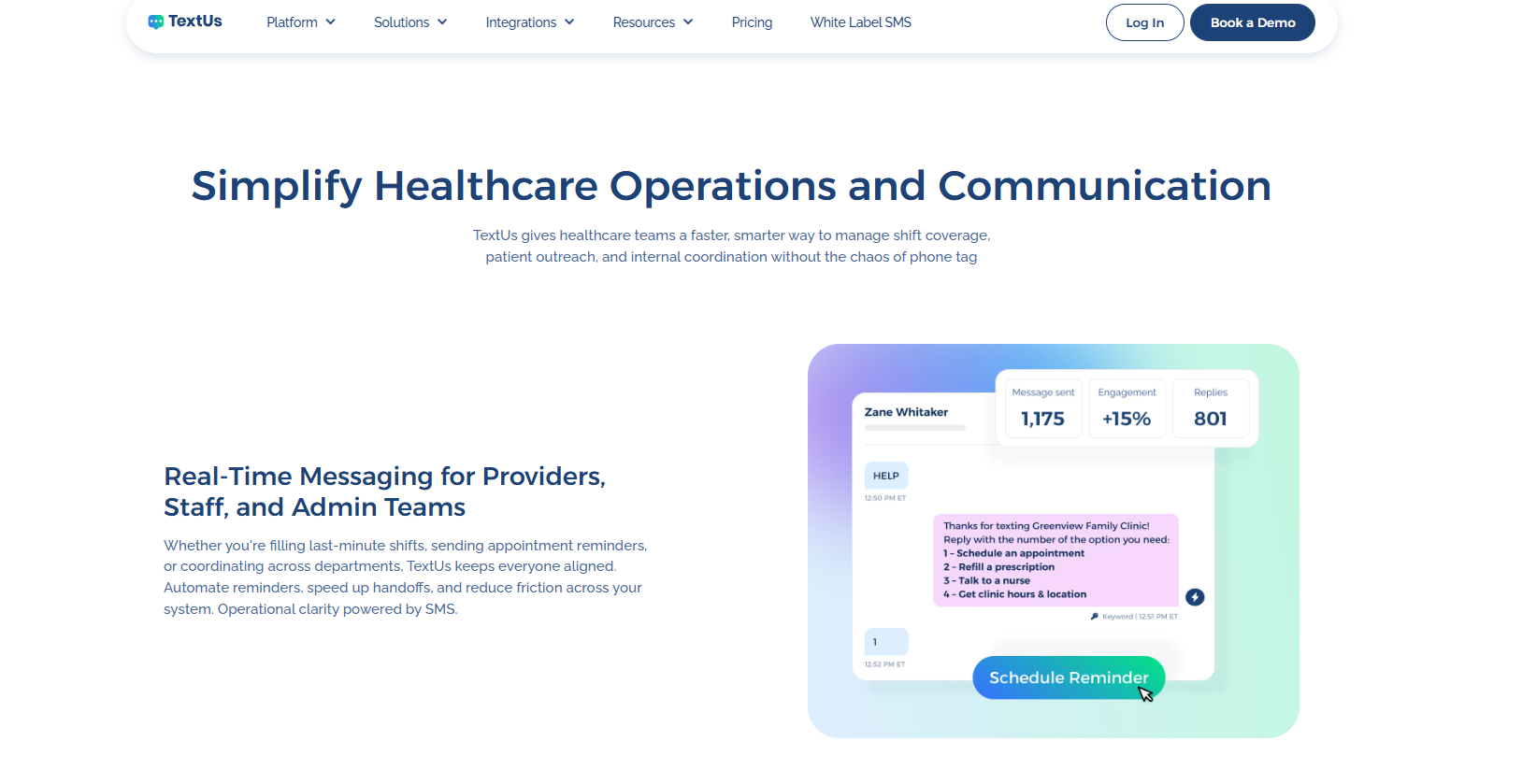
This text recruiting software is ideal for job outreach, interview updates, credential reminders, shift alerts, assignment details, and re-engagement. Candidates can reply in the same conversation.
TextUs also supports SMS marketing campaigns, message templates, campaign scheduling, and automated sequences for repeat outreach.
These tools make high-volume communication more manageable while recruiters remain available for conversations that need a personal response.
Shared inboxes and conversation history create better visibility into candidate communication. Another recruiter can continue the conversation with the right context instead of asking the candidate to repeat information.
TextUs connects with recruiting and workforce platforms such as Bullhorn, Greenhouse, Workday, and Oracle. You'll get a more connected way to manage outreach throughout the staffing lifecycle.
Bring Real-Time Texting to Your Healthcare Staffing Agency With TextUs
Better healthcare communication starts with reaching patients at the right time.
TextUs combines the speed of SMS with team visibility, automation, and integrations built for modern healthcare staffing communication.
Patient reminders, appointment updates, follow-ups, and care coordination become simpler to manage through text.
TextUs also supports automated outreach and real-time conversations, which helps your staff reduce missed appointments while keeping patients informed before and after their visits.
Book a demo with TextUs today to see how secure business texting can support care coordination and create a more connected healthcare experience!
FAQs About Healthcare Staffing Technology
What is the best staffing software for healthcare?
The best recruitment automation software depends on your clients, staffing model, specialties, integrations, and cost requirements.
Platforms should offer healthcare-specific recruiting, credentialing, scheduling, automation, and analytics. Strong communication capabilities are also essential for time-sensitive staffing.
How is AI used in healthcare staffing?
AI in recruitment supports candidate matching, screening, outreach, scheduling, and workforce forecasting. It also gives you the ability to prioritize stronger matches and reduce repetitive work.
What features matter most in healthcare staffing software?
The most important features include applicant tracking, credential management, scheduling, automation, communication, reporting, and integrations.
The right choice should lead to better coordination between the systems your staffing team already uses.
What is the best staffing software?
There is no single best platform for every staffing company. If you post high volumes of jobs, you may prioritize ATS, CRM, automation, and analytics.
For high communication needs, you can also pair your core staffing software with an SMS provider like TextUs for candidate outreach, reminders, and two-way conversations.
Continue Reading



Frequently Asked Questions
Business Texting
Built for Results
Create and convert pipeline at scale through industry leading SMS software