
How Hotel SMS Marketing Improves Guest Satisfaction
Learn how hotel SMS marketing improves guest communication, increases bookings, supports reviews, and enhances the guest experience with TextUs.

Written by
Adam Hamdan
Published
June 10, 2026
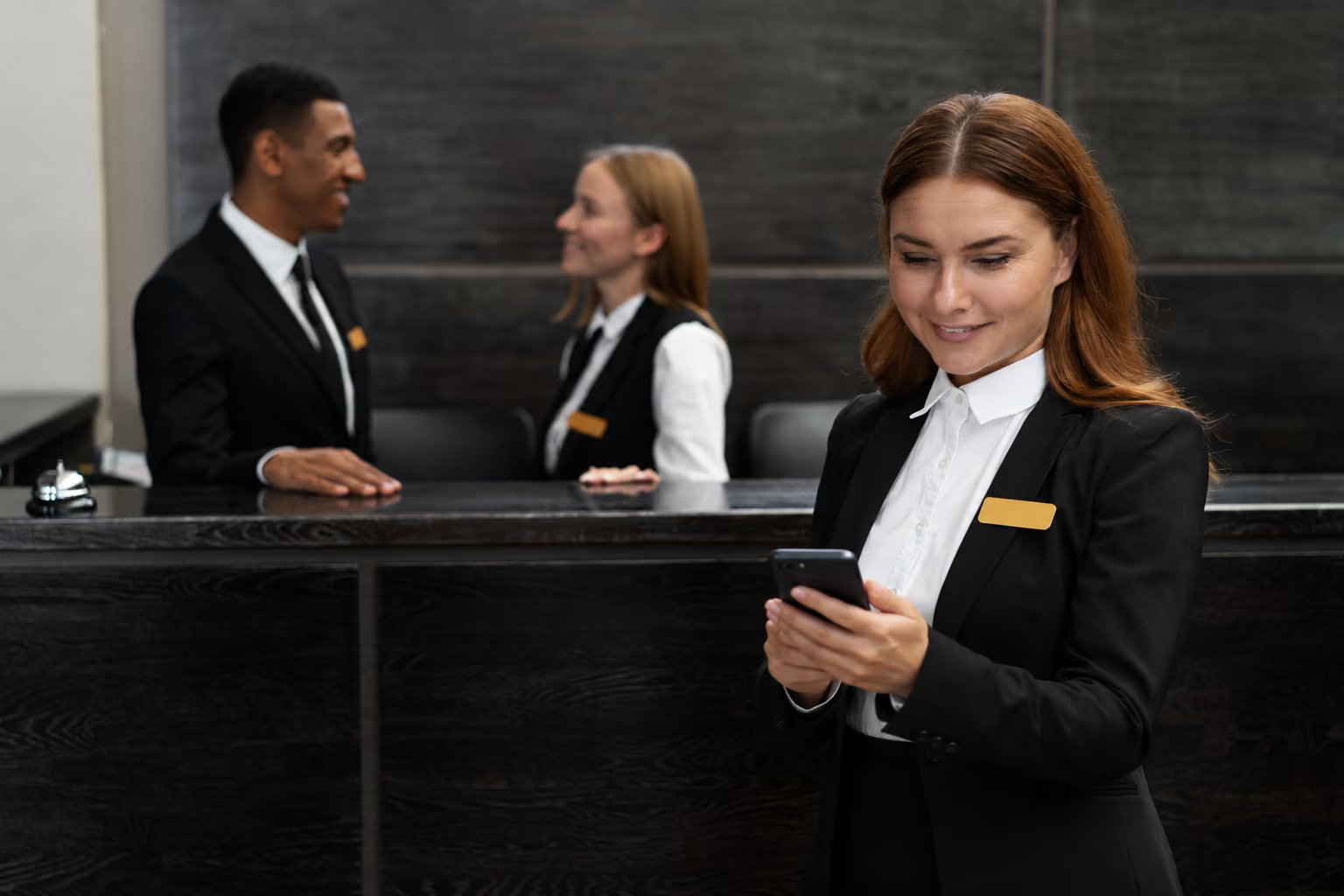
A guest who misses one message can miss a room upgrade, arrive without parking details, skip a special offer, or leave without sharing a review.
Those small gaps can affect the overall stay experience, front desk workload, and repeat bookings.
Instead of relying only on email or phone calls, SMS lets you send booking confirmations and instructions to mobile devices that guests already use throughout the day.
In this guide, you’ll learn the benefits of SMS marketing, when to use it, how to build an effective strategy, and find out how an SMS platform can keep communication more organized.
TL;DR
- SMS marketing gives you a simple way to inform guests about booking updates, special offers, service reminders, and post-stay follow-ups.
- SMS is most useful when each message matches the guest journey, from pre-booking and arrival to the in-stay experience, checkout, and rebooking.
- A strong hotel SMS strategy uses guest segmentation, personalization, smart timing, a message calendar, and strategic CTAs to make every text feel relevant.
- The best setup connects guest data, creates opt-in points, uses short templates, builds automation workflows, collects reviews, and tracks campaign performance.
- TextUs supports hotel SMS marketing with CRM integrations, keyword opt-ins, drip campaigns, two-way texting, review follow-ups, and message tracking.
Benefits of Using SMS for Hotel Guest Communication
The hospitality industry runs on fast service, instant communication, and well-timed guest support.
Texting feels more immediate and personal, which makes it useful for both service updates and promotional offers. Here are the main advantages of using SMS marketing for your hotel service:
Higher Guest Engagement
Guests read text messages faster when the update is short and useful. SMS can also engage guests through quick reminders, offer links, and simple reply options.
That makes hotel text message marketing useful for both service messages and promotional campaigns.
Improved Booking Communication
Visitors do not have to search through email inboxes for basic stay details. A well-timed SMS can answer common questions before they call the front desk or reservations team.
SMS can also be used for transactional messages such as booking confirmations, payment reminders, and check-in reminders.
Enhanced Guest Experiences
SMS marketing for hotels works best when messages match the guest’s stay, preferences, or booking history.
You can provide personalized services with the guest’s name, arrival date, room type, loyalty status, or selected amenities.
Guests also get convenient communication that supports their stay without adding another app or portal.
More Direct Bookings
Direct booking campaigns reduce reliance on third-party travel sites. A short text with a booking link can bring guests back to the hotel site without a long sales process.
SMS also drives direct bookings from past guests, new guests, and loyalty members who have already shown interest.
Better Review Collection
Post-stay SMS messages can make review requests easier. It lets you send a thank-you text with a short link to leave feedback on Google, TripAdvisor, or your hotel's preferred review platform.
This makes it easier to collect valuable feedback while the stay is still fresh.
When Should Hotels Use SMS Marketing?
Timing affects how well your SMS marketing campaigns perform. This is how you should group and send SMS messages to improve guest satisfaction:
Before the Guest Books
SMS marketing can support demand, recover lost reservations, and bring past guests back to the booking page.
At this stage, your campaigns should focus on short offers, useful reminders, and reasons to book direct. The goal is to make the next step simple without sending too many promotional messages.
After the Guest Books
SMS becomes a helpful communication channel for confirmation, preparation, and early upsell opportunities.
You can send booking confirmations, payment reminders, upgrade offers, pre-arrival surveys, check-in instructions, and parking details at this stage.
During the Guest Stay
SMS improves service and increases on-property revenue.
You may send welcome messages, room service promotions, dining offers, event reminders, maintenance updates, guest satisfaction check-ins, and late checkout offers.
After Checkout
SMS keeps the guest relationship active while the stay is still fresh.
After checkout, hotels can stay connected through thank-you messages, review requests, loyalty invitations, and future booking offers. .
Between Stays
SMS marketing brings past guests back with relevant offers and reminders.
This is where you send seasonal marketing promotions, birthday or anniversary offers, loyalty member rewards, local event packages, and win-back campaigns for past guests.
Tips for Building an Effective Hotel SMS Marketing Strategy
A successful hotel SMS marketing strategy starts with guest intent. Here's how you should match each message to the guest’s timing, stay details, interests, and relationship with your hotel.
Map SMS to the Guest Journey
Guests have different needs at each stage, so one general message cannot serve every situation.
At the pre-booking stage, abandoned booking reminders, limited-time offers, or loyalty signup prompts can encourage guests to take the next step.
During booking, pre-arrival, check-in, in-stay, checkout, post-stay, and rebooking stages, SMS supports confirmations, arrival details, room service requests, review collection, and repeat visits.
Personalize Hotel Text Messages
Personalized messages are more relevant because they connect to the person’s actual stay.
You may include simple details like the guest’s name, stay dates, property location, room type, or loyalty status.
Marketing messages based on known guest interests can also make your hotel marketing campaigns sound thoughtful.
For example, guests with past spa packages or dining reservations at the hotel restaurant may respond better to personalized promotions that match their preferences.
Choose the Best Timing for SMS Campaigns
The best time to send campaigns depends on where the traveler is in their stay experience, the message type, and what action you want guests to take.
A text message sent at the wrong moment can get ignored. But timely messages sent at the best point in the entire guest journey can lead to more bookings, upgrades, reviews, or service requests.
Pre-arrival texts work best 24 to 48 hours before check-in, while upgrade offers should reach guests before they arrive.
Dining offers are most useful before meal periods, review requests fit best after checkout, and promotional texts should avoid late-night or early-morning hours.
Create a Message Calendar
A message calendar keeps your messages organized and easier to manage.
It gives each campaign a purpose, whether the goal is to fill rooms, promote seasonal packages, increase amenity bookings, collect reviews, or support customer loyalty.
Your calendar should account for seasons, local events, holidays, occupancy needs, and guest journey stages.
SMS should also line up with email, paid ads, social media, and direct booking offers so guests receive a smooth message flow without too many messages at once.
Build a Compelling CTA for Every Text
A compelling CTA makes each SMS message easier to act on. Guests should know what the next step is within seconds, whether the message is about booking, check-in, upgrades, dining, reviews, loyalty, or support.
The CTA needs to be specific and focus on one clear next step. Best examples include “Book Now,” “Upgrade Your Room,” “Reserve A Table,” “View Check-In Details,” “Leave A Review,” “Join Loyalty Program,” and “Reply For Support.”
How to Set Up SMS Marketing for Your Hotel Service
A hotel SMS marketing setup needs more than a list of phone numbers and a few promotional messages. Here's the best approach to help you send the right message at each stage without overwhelming guests.
Step #1: Choose the Right SMS Marketing Platform
The SMS service you choose should fit hotel industry workflows, not just basic bulk texting.
You have to look for hotel-friendly SMS tools with automation, segmentation, two-way texting, compliance features, integrations, analytics, and a shared inbox for guest replies.
TextUs is an SMS marketing software designed for hotels, resorts, vacation rentals, and hospitality teams that need faster, direct communication.
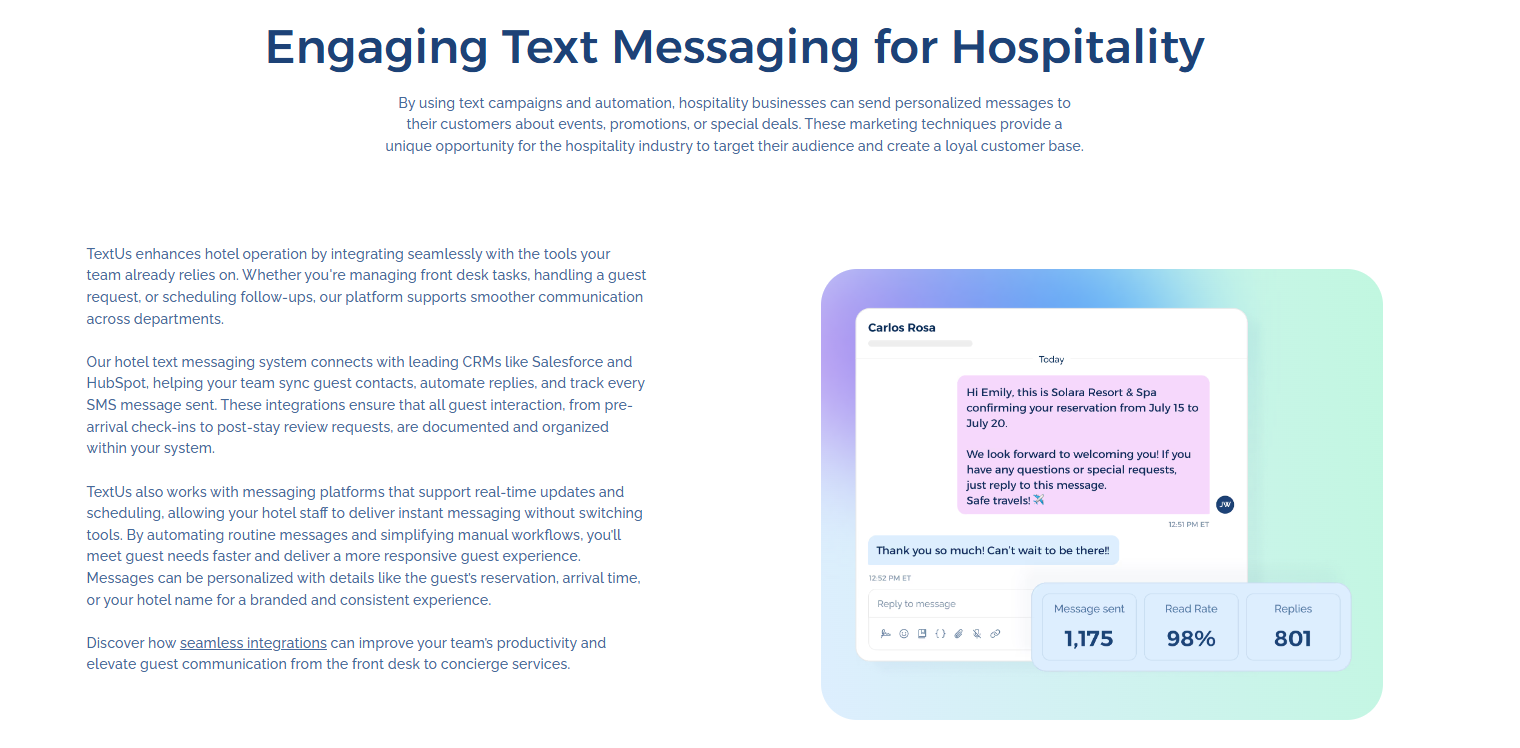
The platform connects SMS with the systems your hotel staff already uses, including CRMs like Salesforce and HubSpot.
Guest contacts, replies, and message history can stay synced, so pre-arrival check-ins, guest requests, scheduled follow-ups, and post-stay review requests are easier to manage.
Your SMS platform should also make routine communication less manual. With TextUs, staff can schedule campaigns, automate replies, and personalize texts with guests’ details.
If you want to improve guest response and manage conversations in real time, book a demo with TextUs today!
Step #2: Connect Guest Data Sources
Your SMS setup should connect with hospitality tools such as a property management system, booking engine, hotel CRM, loyalty platform, website forms, and event registration system.
TextUs can support this connection layer through SMS integrations with CRMs such as Salesforce, HubSpot, and Microsoft Dynamics, along with Zapier for broader workflow connections.
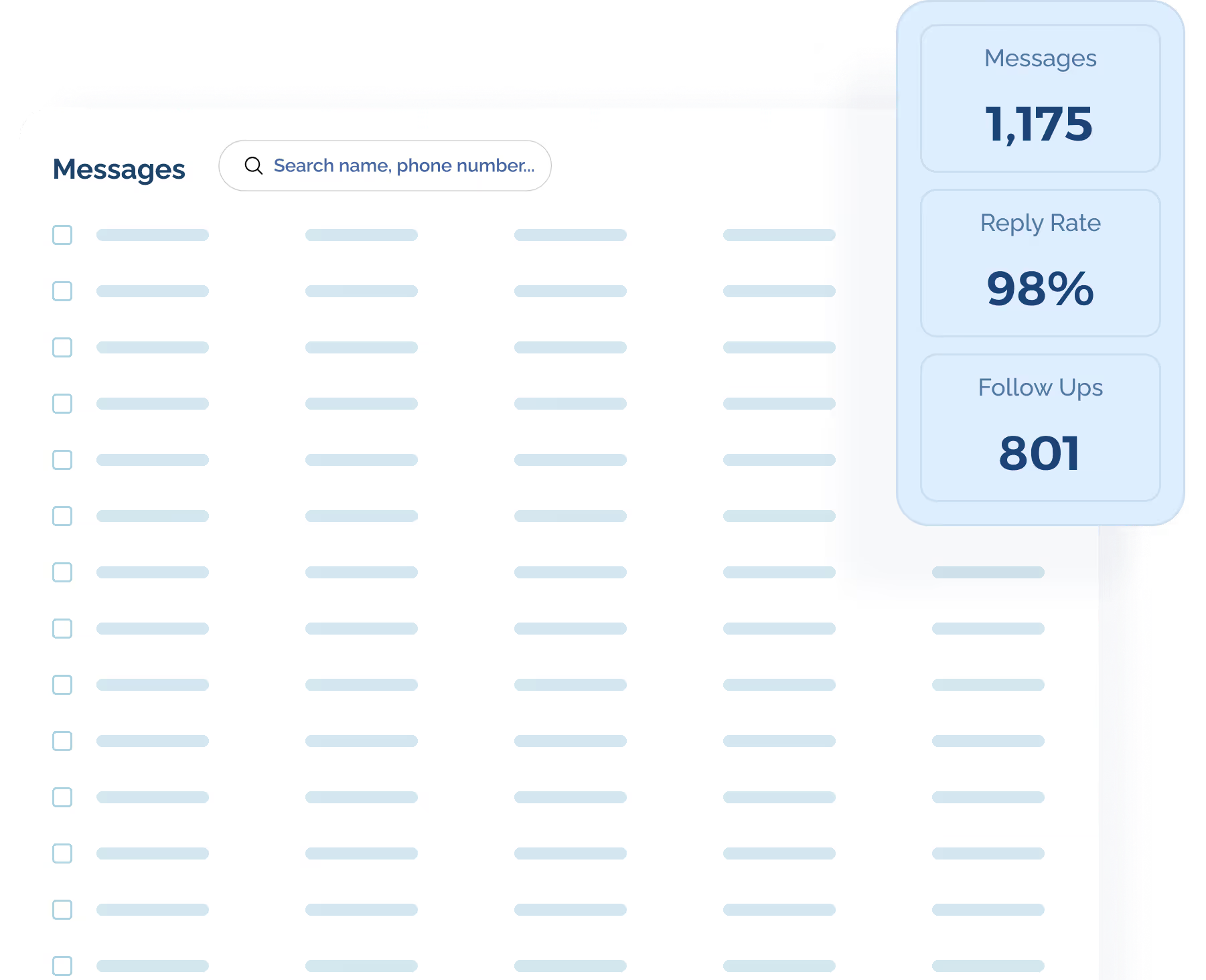
Texts, replies, and follow-up history can be captured in your database, so guest conversations stay connected to the contact record rather than sitting in a separate texting inbox.
Step #3: Create SMS Opt-In Points
Guest opt-ins should be easy to find at the moments when people already show interest in your hotel.
Booking forms, website signup forms, front desk QR codes, loyalty enrollment pages, and event registration forms can all invite guests to receive booking updates, special offers, and loyalty messages.
TextUs makes SMS opt-ins smoother by letting guests text a keyword or scan a QR code to subscribe.
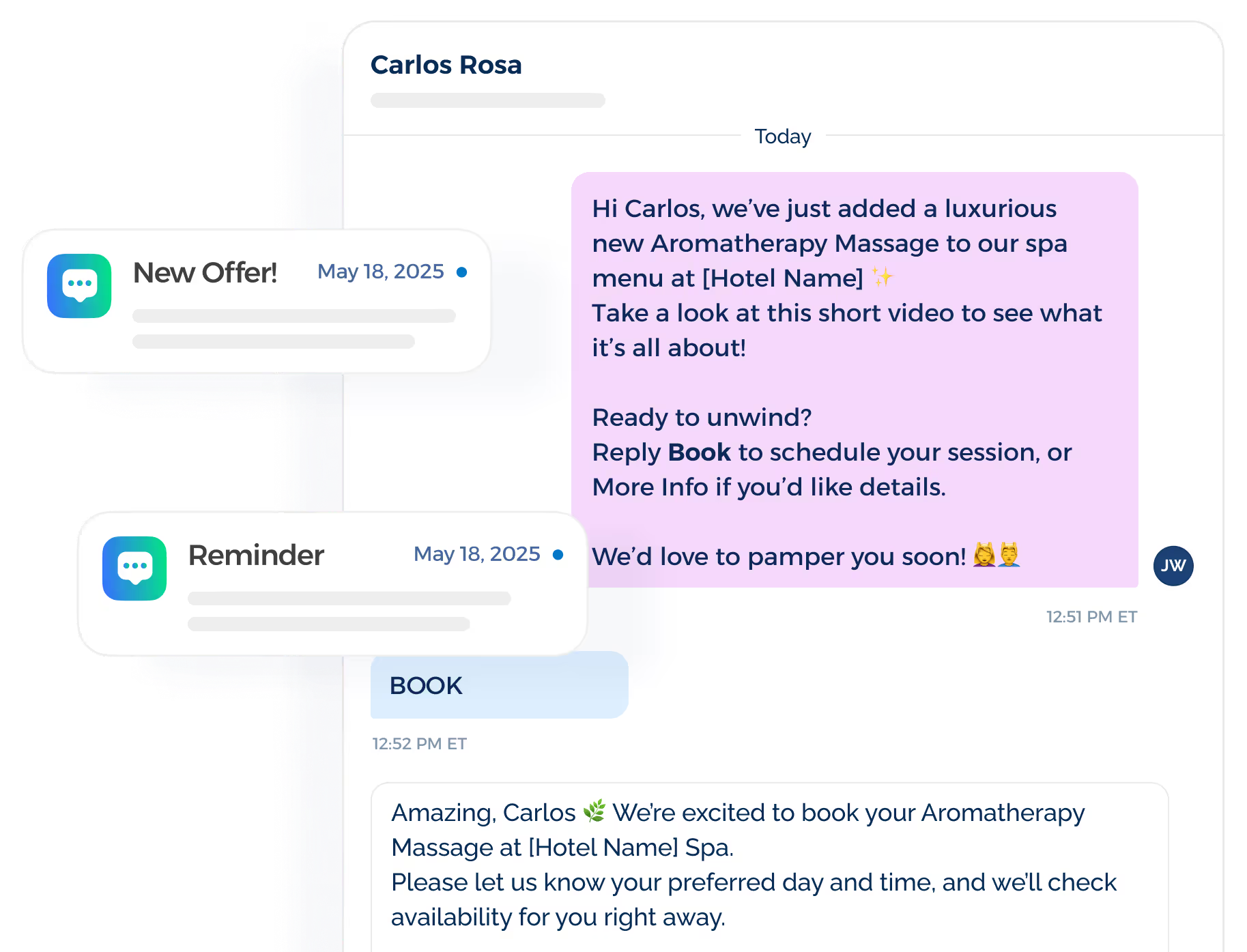
It also supports keyword-powered automation that can capture interest, increase response rates, and guide SMS subscribers through follow-up paths based on their replies.
Step #4: Segment Hotel Guests
SMS segmentation helps you send messages that match the guest's preferences, profile, and reason for travel.
A first-time visitor may need more arrival details, while a returning guest may respond better to a loyalty reward or private rebooking offer.
Common segments include first-time visitors, repeat customers, loyalty members, business travelers, leisure travelers, group bookings, local residents, and high-value customers.
Step #5: Write SMS Templates
Your text templates need to be consistent while saving time for your staff.
Templates should cover booking confirmations, payment reminders, pre-arrival instructions, room upgrade offers, dining promotions, loyalty invites, and post-stay follow-ups.
You need to keep messages concise and focused on one guest action. You have to include an opt-out language where required, especially for promotional SMS marketing messages that mention offers.
Step #6: Build Automation Workflows
A good starting point is to focus on the core messages guests prefer to receive. This could be booking confirmations, pre-arrival updates, welcome texts, checkout reminders, and feedback requests.
TextUs lets you send drip SMS campaigns that keep guests informed from check-in to checkout.
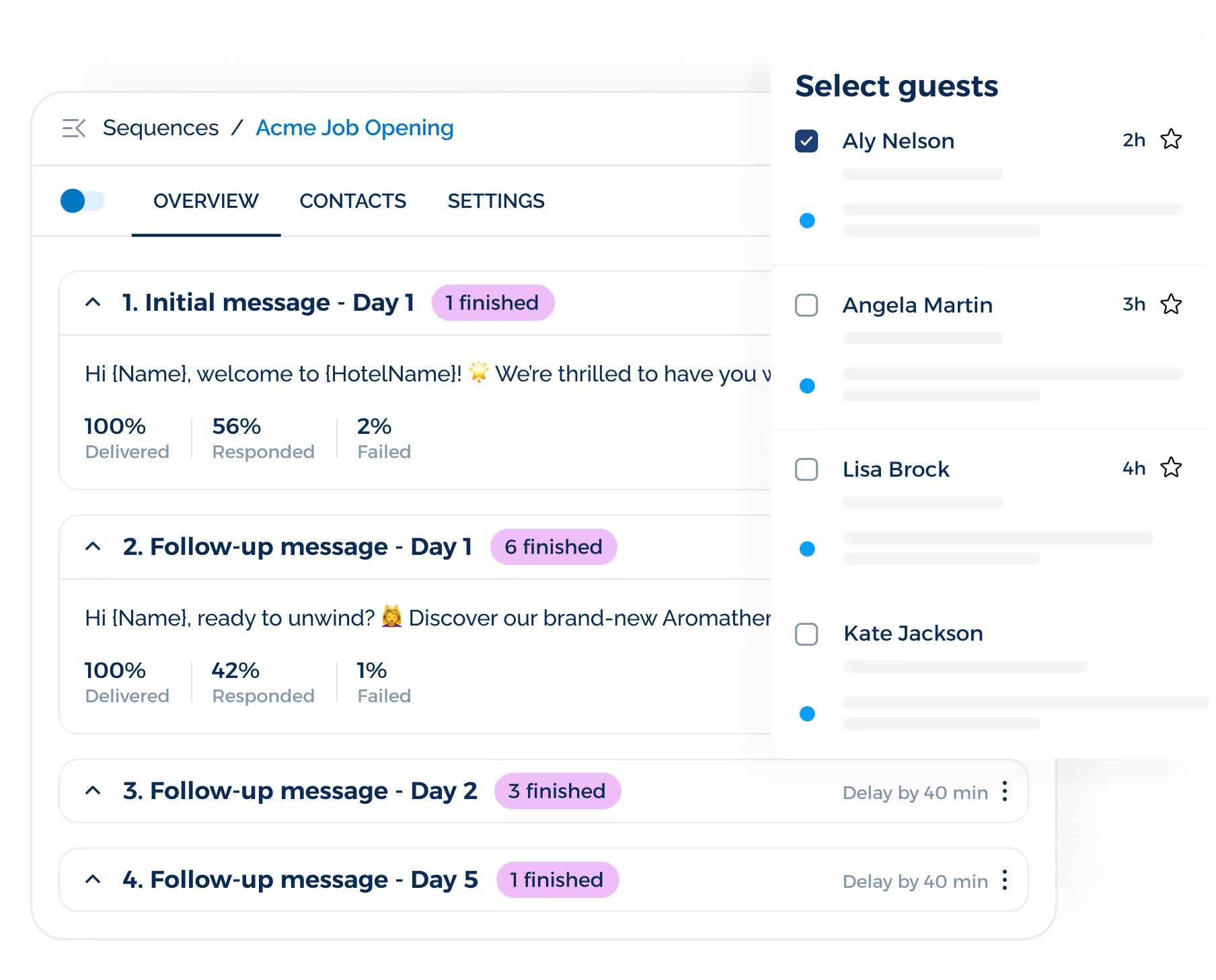
Quick check-in texts provide stay details, property updates, or next steps. Automated follow-ups can support amenity requests such as towels, housekeeping, room service, dining, or concierge support.
Once the basic workflows are running well, promotional workflows can be added with a stronger foundation.
Step #7: Collect Guest Reviews
Feedback should be part of your SMS marketing workflow because it's easier to collect shortly after checkout.
Your message has to include the guest’s name, hotel name, and one review link, along with a support option for guests who want to share a concern.
TextUs lets you follow up after checkout with automated review request messages.
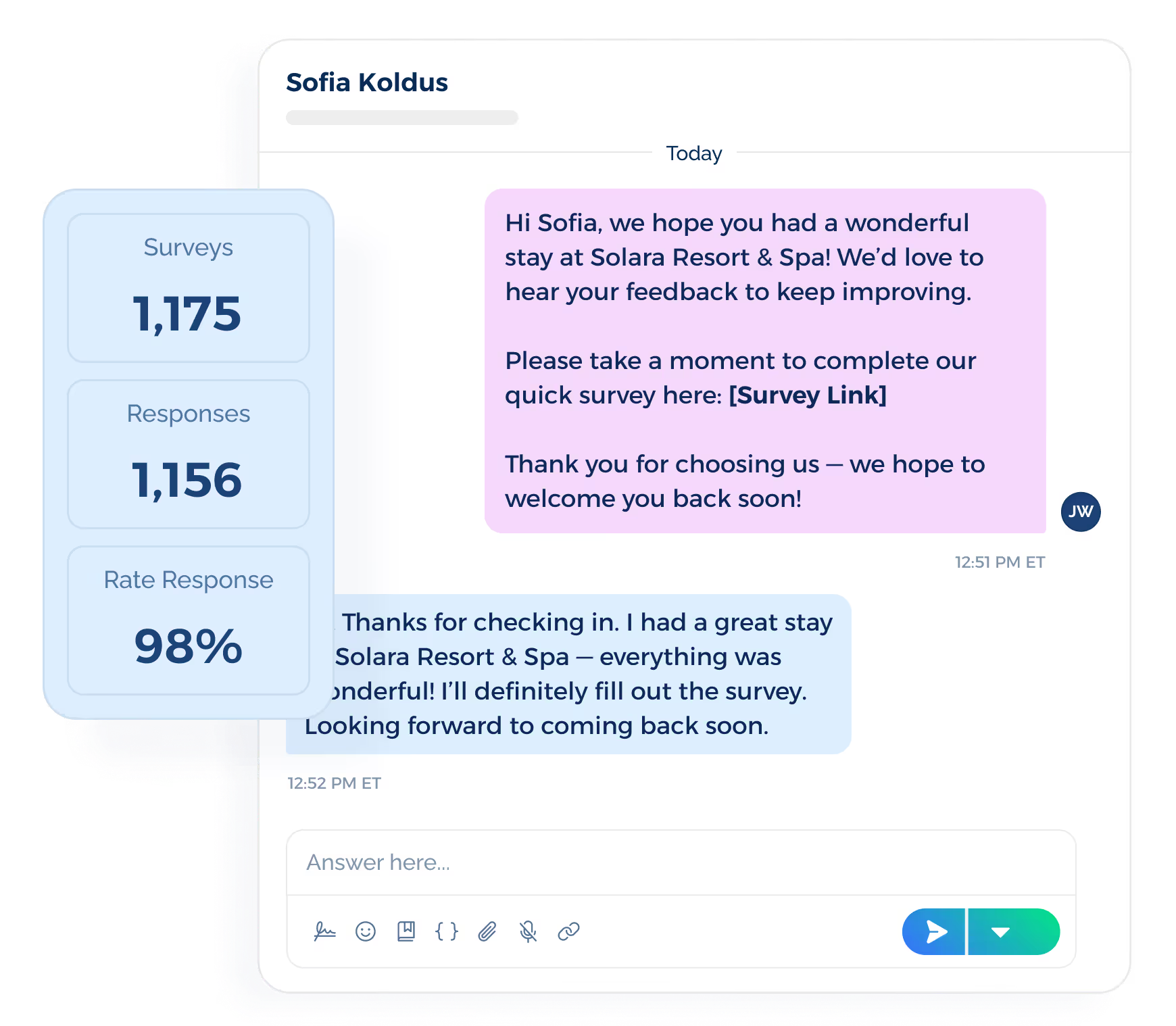
These texts can support reputation growth by making the review process simple for guests. Staff can also immediately spot concerns that need personal follow-up before they turn into public complaints.
Step #8: Track Results and Improve
Your results can show which messages are worth repeating and which ones need better timing, clearer wording, or a more relevant offer.
For example, a high opt-out rate may mean guests are receiving too many promotions, while low clicks may mean the CTA or offer needs work.
Key metrics include delivery rates, click rates, replies, booking conversions, upgrade revenue, review submissions, opt-outs, and guest feedback.
Improve Guest Communication From Booking to Checkout With TextUs
A missed guest message can mean a missed booking, a delayed request, or a weaker stay experience.
With TextUs, your team gets a direct line to guests before arrival, during the stay, and after checkout.
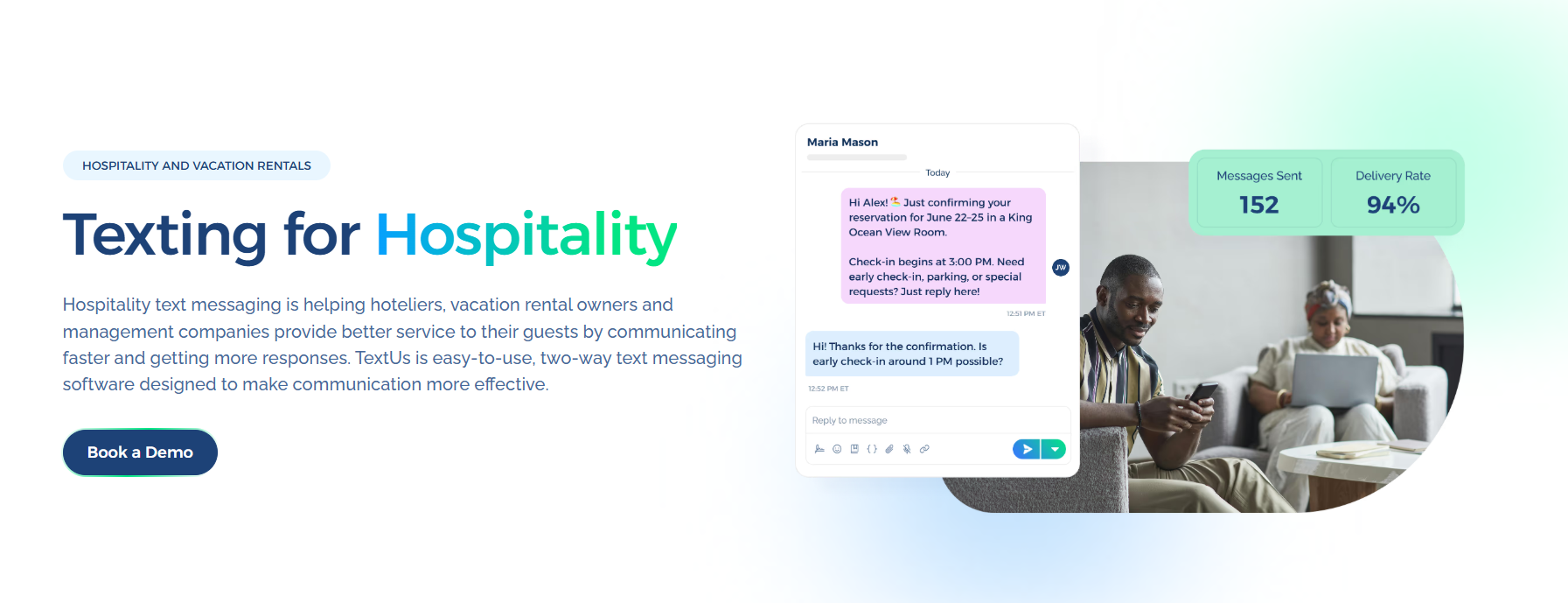
TextUs turns routine communication into a smoother guest experience. It lets you automate messages, follow up after checkout, and keep text history connected to the systems you already use.
With SMS, travelers have an easier way to make reservations, request room service, or ask for assistance without needing to call the front desk.
Visitors receive the information they need without searching through email, while staff can respond faster from a more organized workflow.
Book a demo with TextUs today to see how smarter hotel text messaging can boost guest communication from the first booking to the next stay!
Continue Reading



Frequently Asked Questions
Is SMS marketing illegal?
No. SMS marketing is legal when businesses follow SMS compliance rules. This means you need explicit consent, business identification, and a simple way for recipients to opt out.
In the U.S., the Telephone Consumer Protection Act (TCPA) requires consent for marketing texts, and the FCC’s newer opt-out rules for robocalls and robotexts took effect on April 11, 2025.
What is the 15/5 rule hotel?
The 15/5 rule is a hospitality service guideline. Staff should acknowledge a guest at about 15 feet away, then greet or assist them at about 5 feet away.
It's used to make guest interactions feel more attentive and welcoming.
Is SMS becoming obsolete?
No. SMS is still a strong channel for hotel guest communication. Guests do not need to download an app, open a portal, or search through email to see important updates.
For hotels, SMS works best as part of a broader communication strategy with email, website forms, and guest service tools.
Business Texting
Built for Results
Create and convert pipeline at scale through industry leading SMS software