
10 Best Bulk Email and Text Recruiting Tools in 2026
Review 10 bulk email and text recruiting tools and learn why TextUs is a strong choice for fast candidate outreach and two-way texting.

Written by
Adam Hamdan
Published
October 27, 2026

You may have a large candidate database, but that doesn't guarantee strong response rates. Email alone may miss people, while repeated calls can lead to phone tag and slow down follow-up.
Bulk email works for job details, sourcing outreach, talent nurture, and longer updates that need more context.
Texting is better suited to quick questions, reminders, interview coordination, job alerts, and short conversations throughout the candidate journey.
The best text recruiting software and bulk email tools support different communication needs during sourcing, follow-up, and candidate engagement.
This article compares the leading bulk email and text recruiting tools, explains the role of each channel, and identifies features that align with your hiring workflow.
TL;DR
Here are the ten leading bulk email and text recruiting tools, grouped by their primary use:
- Bulk text recruiting tools: TextUs, Emissary, Sakari, Sense, iCIMS Text Engagement
- Bulk email recruiting tools: Gem, SourceWhale, Mailmeteor, Lemlist, Recruiterflow
Email vs. SMS Recruiting: Which Drives More Engagement?
SMS recruiting performs better when you need a fast response, while email has an advantage when a message requires more space, context, or supporting information.
The best channel depends on the candidate, the stage of the recruitment process, and what you need someone to do next.
According to the TextUs 2026 SMS Engagement + Benchmark Report, SMS had a 34.7% reply rate compared with 5% for email, based on a survey of more than 700 professionals.
SMS also fits short, time-sensitive communication such as screening questions and reminders. Email provides more room for detailed role introductions, employer information, and longer explanations.
The two channels also complement each other when recruiters manage large candidate pools for several roles.
Email may introduce an opportunity and provide the details, while SMS handles the next short action, such as confirming interest or choosing an interview time.
Matching the channel to the purpose of your message can make all the difference when candidate attention and response time are limited.
Best Bulk Text Recruiting Tools for Hiring Teams
Bulk text messaging tools are beneficial if you need faster ways to reach candidates at different stages of hiring. Here are the top five options to consider:
1. TextUs
TextUs is the best text recruiting software built around two-way business texting for staffing and talent acquisition.
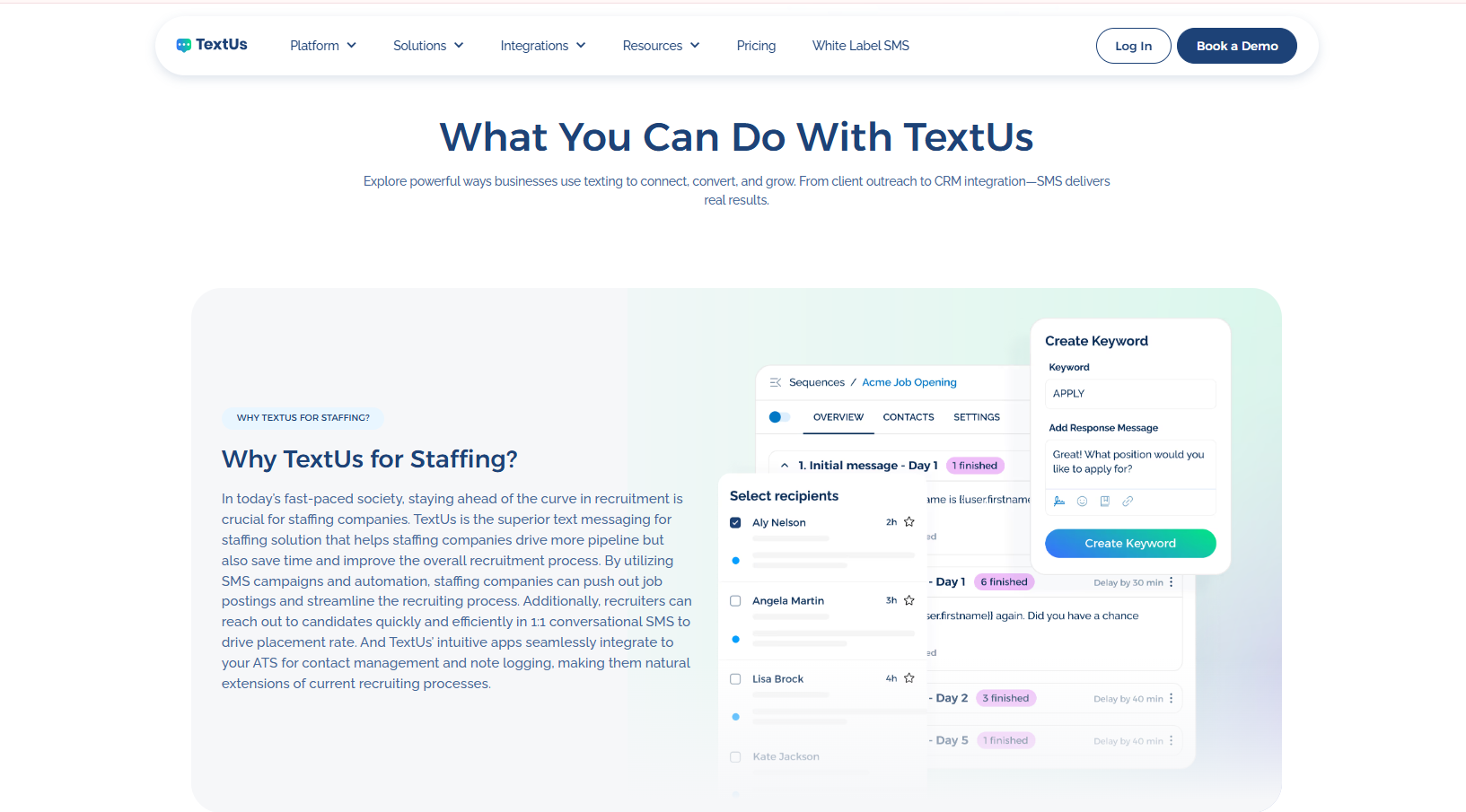
It provides bulk SMS capabilities, including automated campaigns, applicant tracking system (ATS) integrations, AI Smart Delivery, automated sequences, deliverability controls, and recruiter collaboration in one platform.
TextUs supports personalized outreach to targeted candidate lists, scheduled and recurring sends, templates, segmentation, rich media, branded short links, and campaign reporting.
Conversation assignments, full histories, and team visibility keep candidate responses away from a recruiter's personal phone or isolated inbox. Sequences send a series of personalized messages at scheduled intervals and may stop once a candidate responds.
SMS keywords add another path into automated recruiting workflows, while keyword responses place contacts into subscriber groups for future segmentation.
TextUs integrates with supported recruiting systems, including Bullhorn, Greenhouse, Workday, Oracle, JobDiva, LaborEdge, SAP SuccessFactors, Tracker, Salesforce, and HubSpot.
The platform also supports 10DLC carrier registration, consent tracking, organization-wide opt-out controls, STOP handling, and opt-out rate monitoring.
If bulk recruiting outreach is already part of your strategy, TextUs adds the SMS infrastructure and tools needed to turn large campaigns into conversational interactions.
Book a demo with TextUs today to see how campaigns, automation, integrations, and two-way texting fit into your current recruiting stack!
2. Emissary
Emissary is a text recruiting platform built for candidate and employee messaging, recruitment automation, and HR communication.
The platform supports one-to-one SMS conversations, large-scale campaigns, recruiting chatbots, short codes, text-to-apply, and a centralized texting inbox.
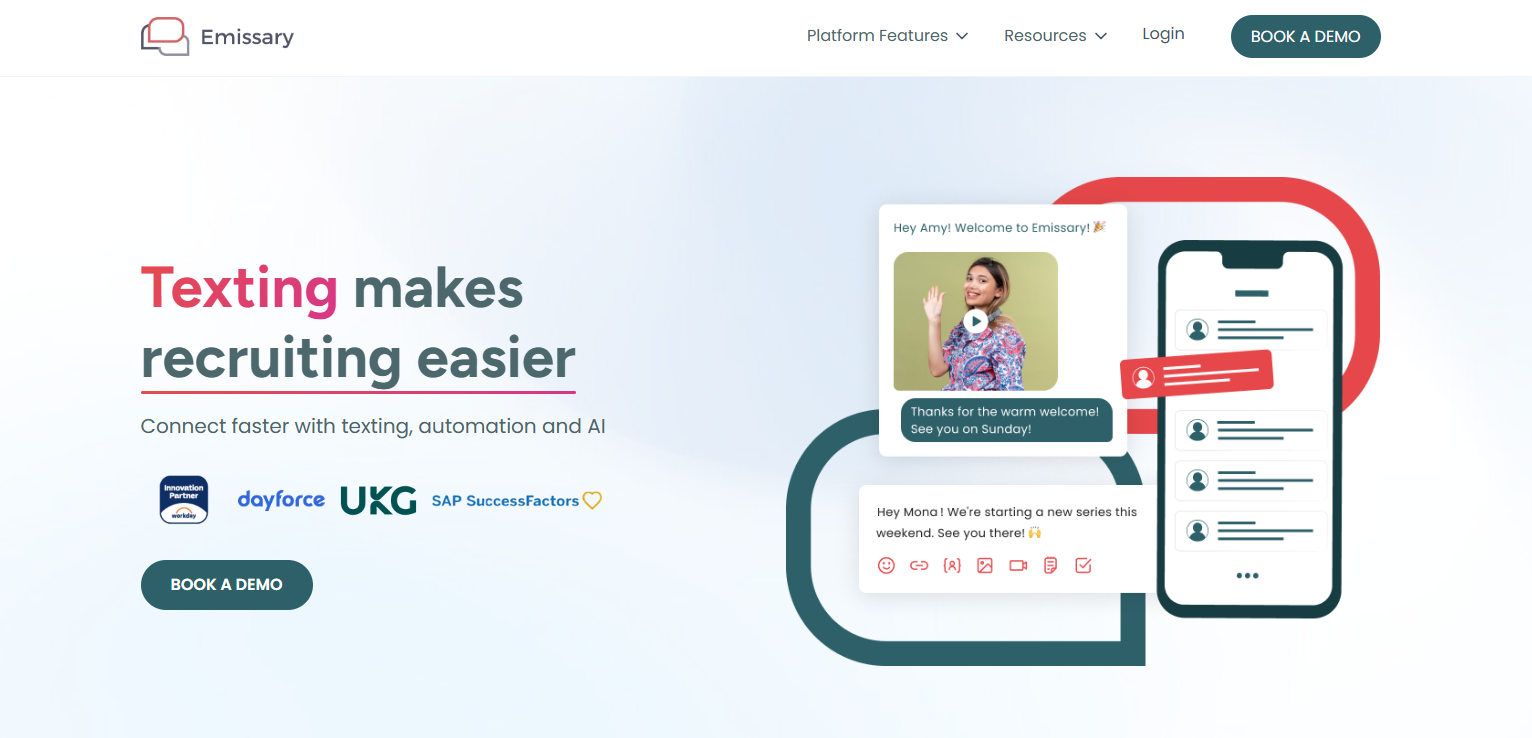
Its text campaigns feature supports group outreach to audiences ranging from small lists to thousands of contacts. You may create templates, add dynamic fields for personalization, schedule campaigns, and tailor text messages with variables from candidate records.
Emissary also connects texting with existing recruiting systems such as Workday, SAP SuccessFactors, Greenhouse, and Lever. It supports functions such as two-way data synchronization, triggered texting, and transcript syncing.
This SMS recruiting software also supports texting from within recruiting and HCM interfaces. It combines bulk campaigns with individual follow-up once candidates respond.
Its broader feature set also includes automated screening, interview coordination through recruiting chatbots, message records, and compliance support for recruiting communications.
3. Sakari
Sakari is a cloud-based business messaging platform for SMS, MMS, automated workflows, and two-way conversations.
Its campaign and contact-management features support hiring use cases where teams need to reach groups of applicants or follow up with individual candidates.
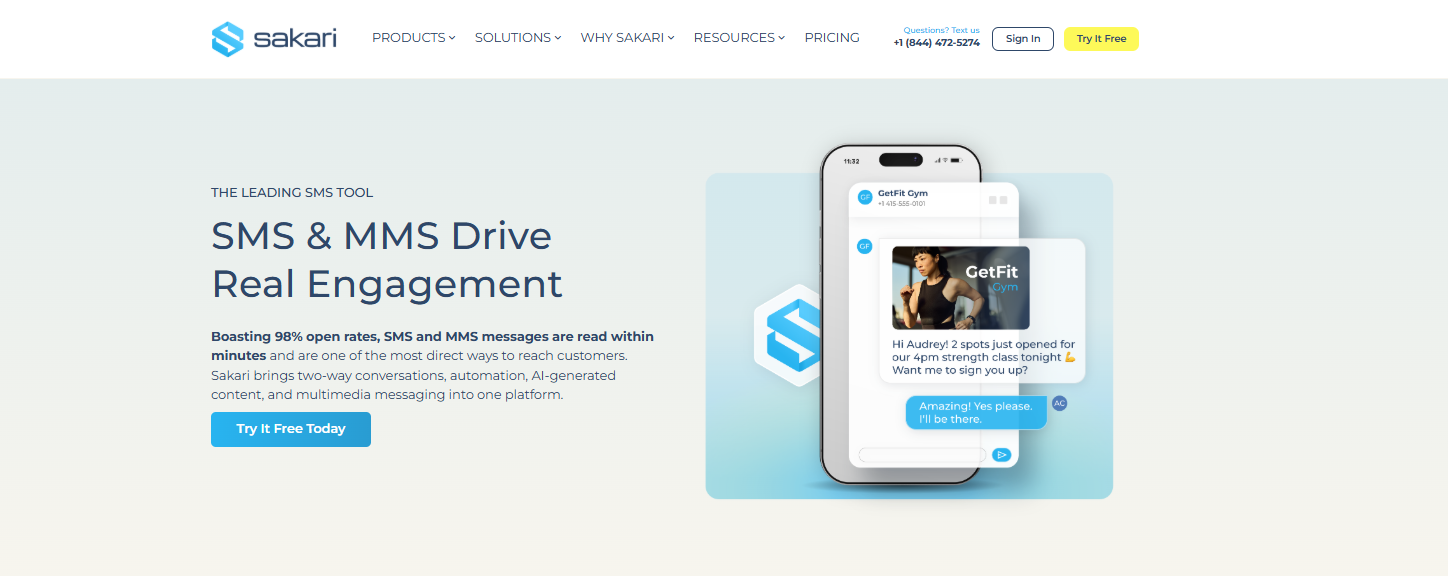
For bulk messaging, Sakari supports targeted recruiting texts to segmented contact lists, personalized fields pulled from contact records, scheduled sends, and automated sequences.
Candidate replies move into Sakari’s shared inbox, where multiple users have access to conversation history and ongoing two-way exchanges. You can also connect Sakari with systems such as HubSpot, Salesforce, Pipedrive, Zoho CRM, and other business applications.
Sakari has documented recruitment and admissions use cases through Per Scholas, which uses targeted campaigns at different stages of its admissions pipeline.
Those campaigns include pre-course confirmations, follow-ups for stalled applicants, missed-interview outreach, and re-engagement messages for qualified applicants who stopped responding to email.
4. Sense
Sense is an AI-powered candidate engagement platform for recruiting, staffing, and candidate communications.
Its messaging suite includes SMS, mass texting, WhatsApp, a mobile app, and automated workflows that connect outreach with other stages of the talent lifecycle.
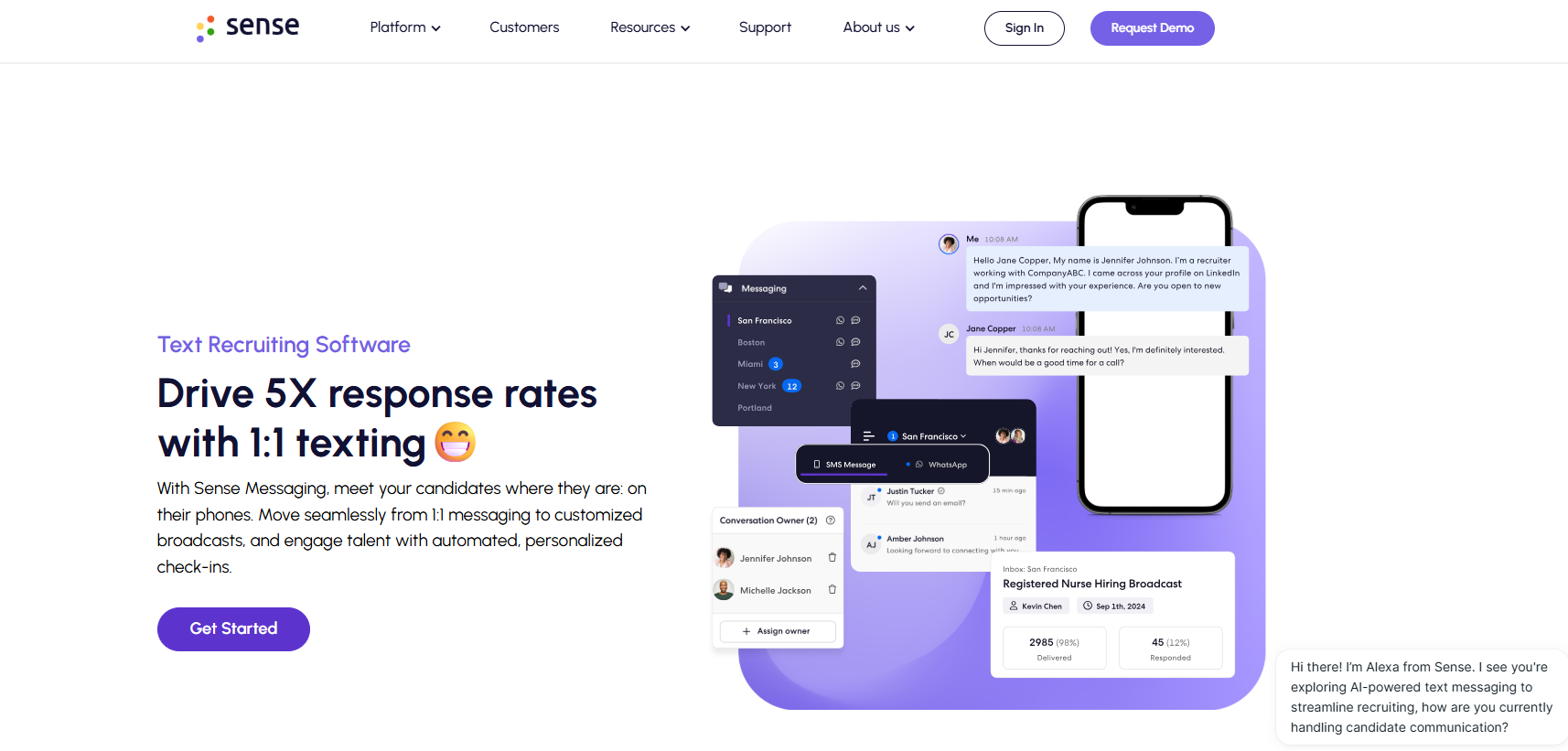
For bulk outreach, Sense lets you build contact groups from ATS or CRM records or upload phone numbers through a spreadsheet. Campaigns support personalized fields, scheduled broadcasts, and outreach to hundreds of contacts at once.
Campaign testing is another part of the platform. You may run A/B tests using different message copy, calls to action, and styles, then compare which version produces stronger response rates.
Its SMS tools include one-to-one texting, templates, centralized recruiter collaboration, and automated workflows for follow-ups, updates, screening, and scheduling.
Integrations with systems such as Greenhouse, Workday, iCIMS, Dayforce, and other recruiting platforms connect messaging activity with existing recruiting records and workflows.
5. iCIMS Text Engagement
iCIMS Text Engagement (formerly known as TextRecruit) is a candidate texting and recruiting automation module within the platform’s talent acquisition suite.
It supports SMS outreach at scale alongside one-to-one conversations, with campaign tools designed for candidate nurturing, re-engagement, employee communication, and other recruiting use cases.
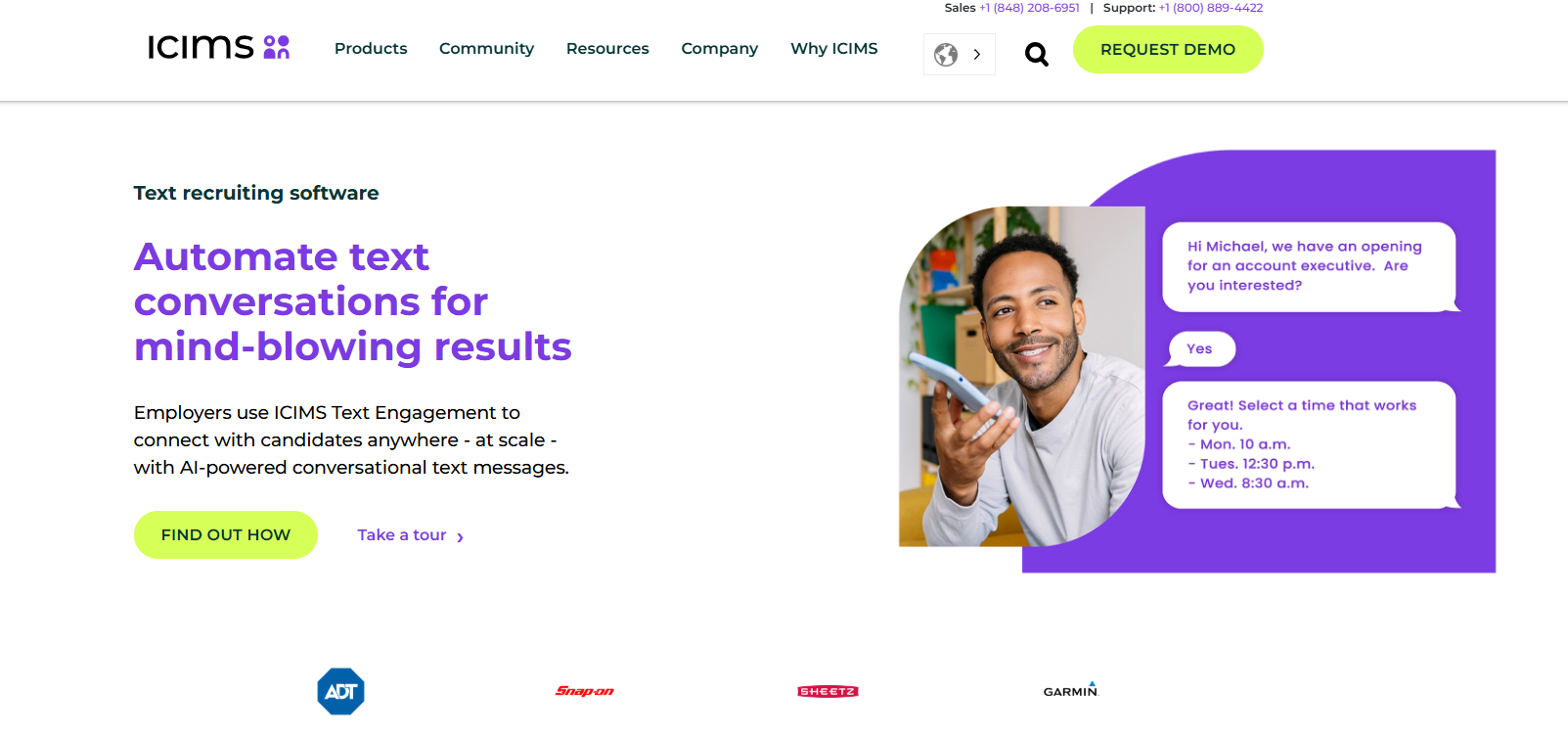
The platform lets you create recurring campaigns that trigger when candidates stop responding, promote open roles through SMS, and send broader workforce updates through bulk campaigns.
iCIMS also supports automated follow-ups tied to recruiting activity, while its Digital Assistant adds AI-generated conversations for candidate and employee questions.
Scheduling tools connect candidate outreach with Microsoft 365, Outlook, and Google Calendar. iCIMS also supports international communication through SMS, WhatsApp, Facebook Messenger, and WeChat.
Compliance controls include communication audit trails, prior express consent capture, and opt-out commands that support requirements such as the Telephone Consumer Protection Act.
Best Bulk Email Recruiting Tools for Hiring Teams
Bulk email tools support recruiting emails for sourcing, follow-ups, job promotion, and longer candidate outreach. Here are five platforms to consider:
6. Gem
Gem is a talent acquisition platform with sourcing, pipeline management, Customer Relationship Management (CRM), and analytics capabilities for recruiting organizations.
Its email tools support candidate outreach through personalized sequences, bulk sends, and longer-term nurture campaigns, with prospects added from sourcing sites, CSV uploads, or Gem projects.
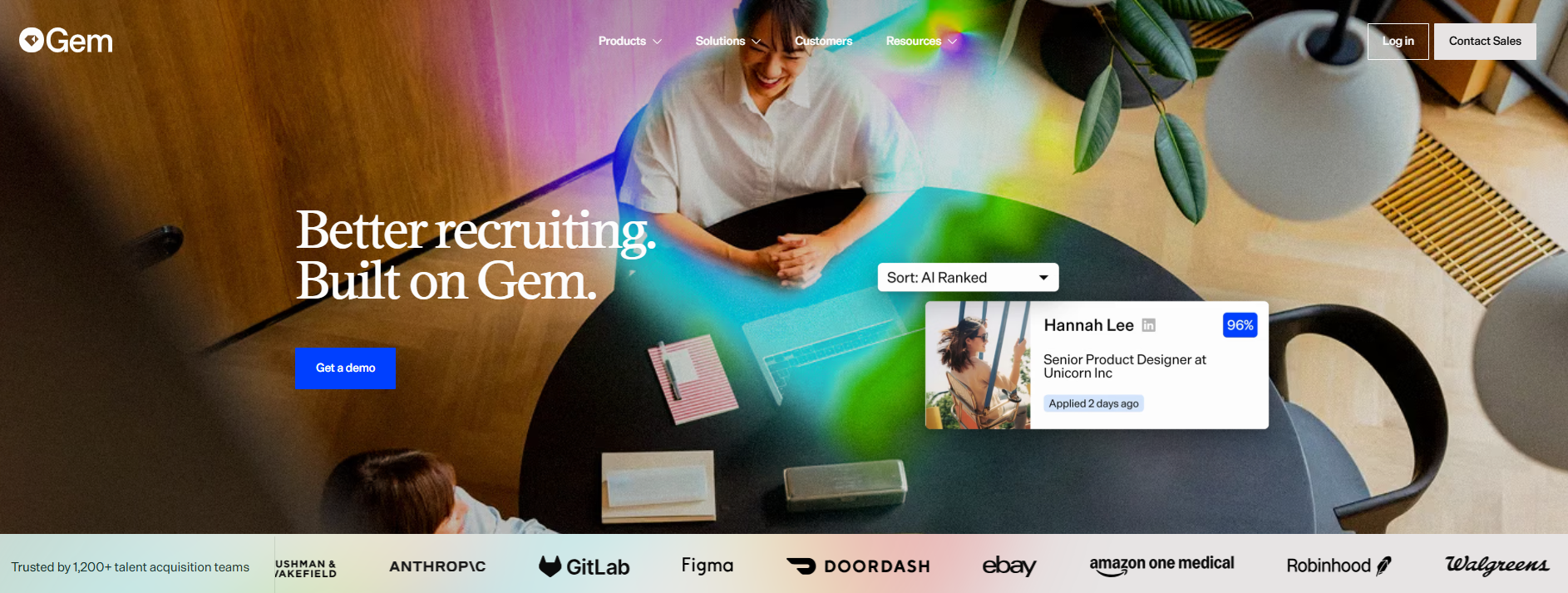
Sequences support multi-stage email outreach with scheduled messages, custom tokens, and automatic follow-ups that stop after a candidate responds.
Campaigns focus on branded emails sent to mailing lists for talent communities, employer branding, and longer-term nurture, with multi-stage scheduling and reporting for deliveries, opens, and clicks.
For personalized outreach, Gem pulls information from prospect profiles into dynamic templates and supports AI-assisted message drafting. You can send messages on behalf of hiring managers or other leaders through email aliases.
Gem also tracks metrics such as opens, replies, interested responses, and conversions, while ATS integrations connect sourced prospects and recruiting activity with existing candidate records.
7. SourceWhale
SourceWhale is an AI recruitment platform built around sourcing, outreach, communication, and hiring workflows.
Its outreach product supports multi-step sequences using email, SMS, and phone, with email serving as a major channel for candidate and client campaigns.
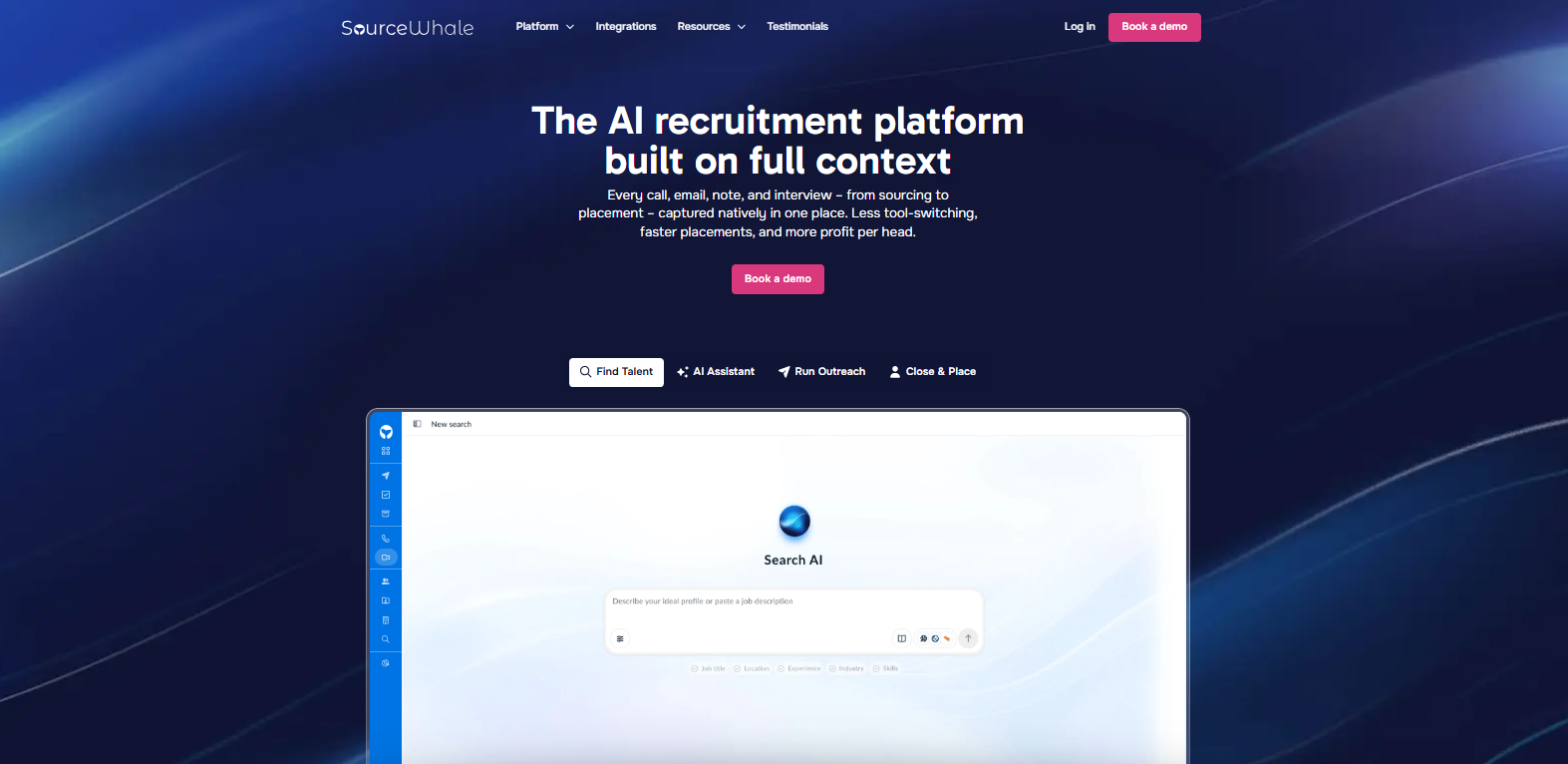
SourceWhale lets you create multi-step outreach, trigger follow-ups without manual chasing, and duplicate successful campaigns for team use.
Built-in deliverability controls also focus on inbox placement and sender reputation, which is important when teams run larger outbound campaigns.
The platform also draws from previous calls, emails, notes, replies, company information, and career history to shape future outreach, while verified contact details come from multiple data sources before a campaign starts.
Its Inbox Agent adds AI-drafted replies, engagement tracking, and automated follow-ups inside Gmail or Outlook. It connects with more than 100 ATS, CRM, and recruitment tools, including Bullhorn, Greenhouse, HubSpot, JobAdder, SmartRecruiters, Vincere, and Zoho Recruit.
8. Mailmeteor
Mailmeteor is an email outreach and mail merge platform for Gmail, Outlook, Google Sheets, Google Docs, Excel, and its own campaign dashboard. It provides bulk email features to support sourcing and other hiring outreach.
Contact lists may come from Google Sheets, CSV files, or saved contacts, with spreadsheet columns used as variables inside each email. You can customize fields such as a candidate's name, role, company, or other information already stored in the source list.
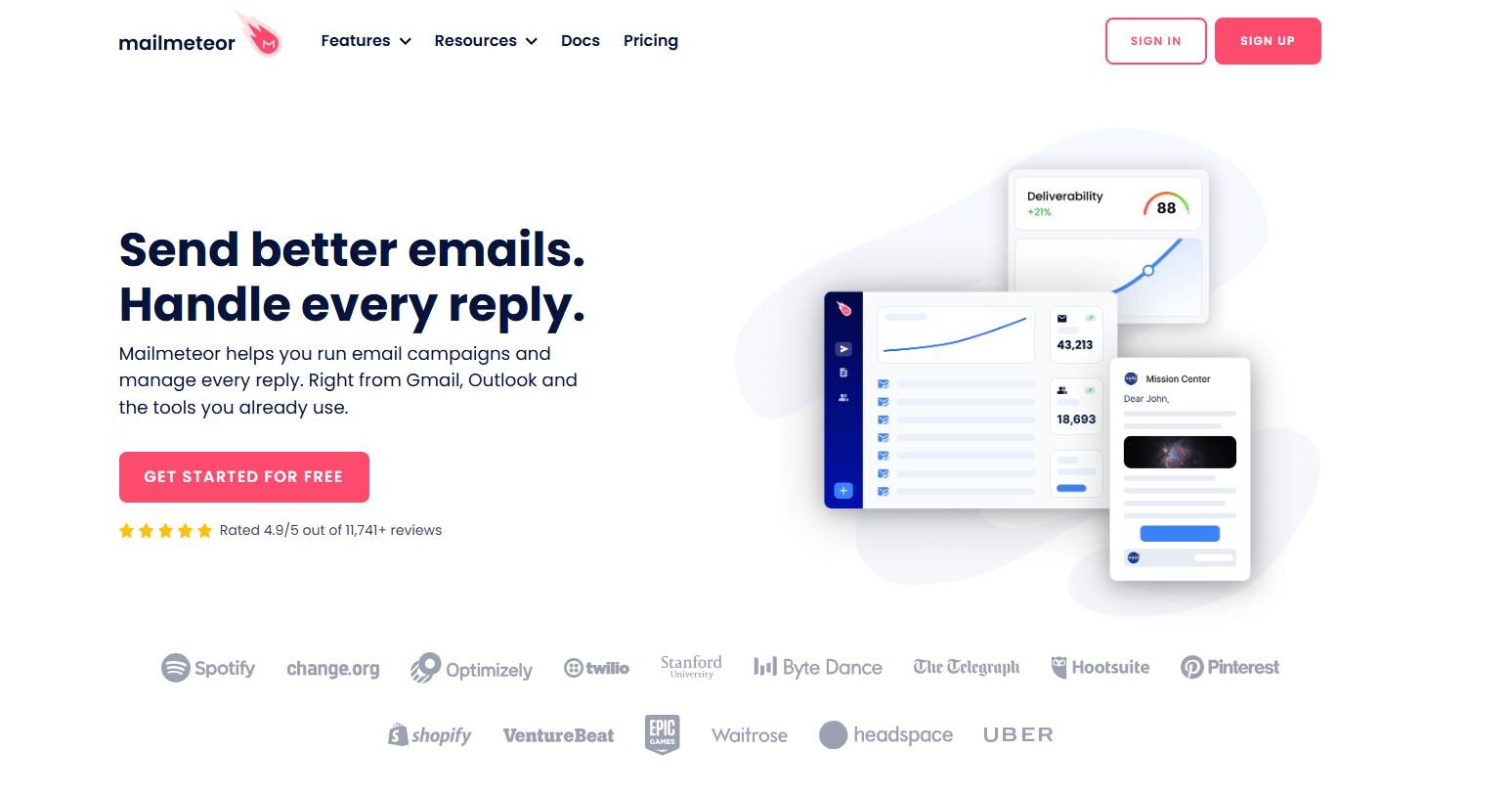
Mailmeteor supports multi-step sequences over several days or weeks, plus conditional follow-ups based on actions such as whether a recipient replied or did not reply.
Campaigns may also run through Autopilot, which distributes sending throughout the day with configurable delays instead of releasing the full list at once.
Mailmeteor also offers BounceShield, email verification, scheduling, and other deliverability controls. Sent messages remain associated with the connected Gmail or Outlook account.
9. Lemlist
Lemlist is an AI outbound platform for prospecting and multichannel outreach across email, LinkedIn, calls, WhatsApp, and SMS.
It has email campaign tools that support large contact lists, multi-step sequences, scheduled sends, follow-up emails, and campaign tracking that fit candidate sourcing and outreach use cases.
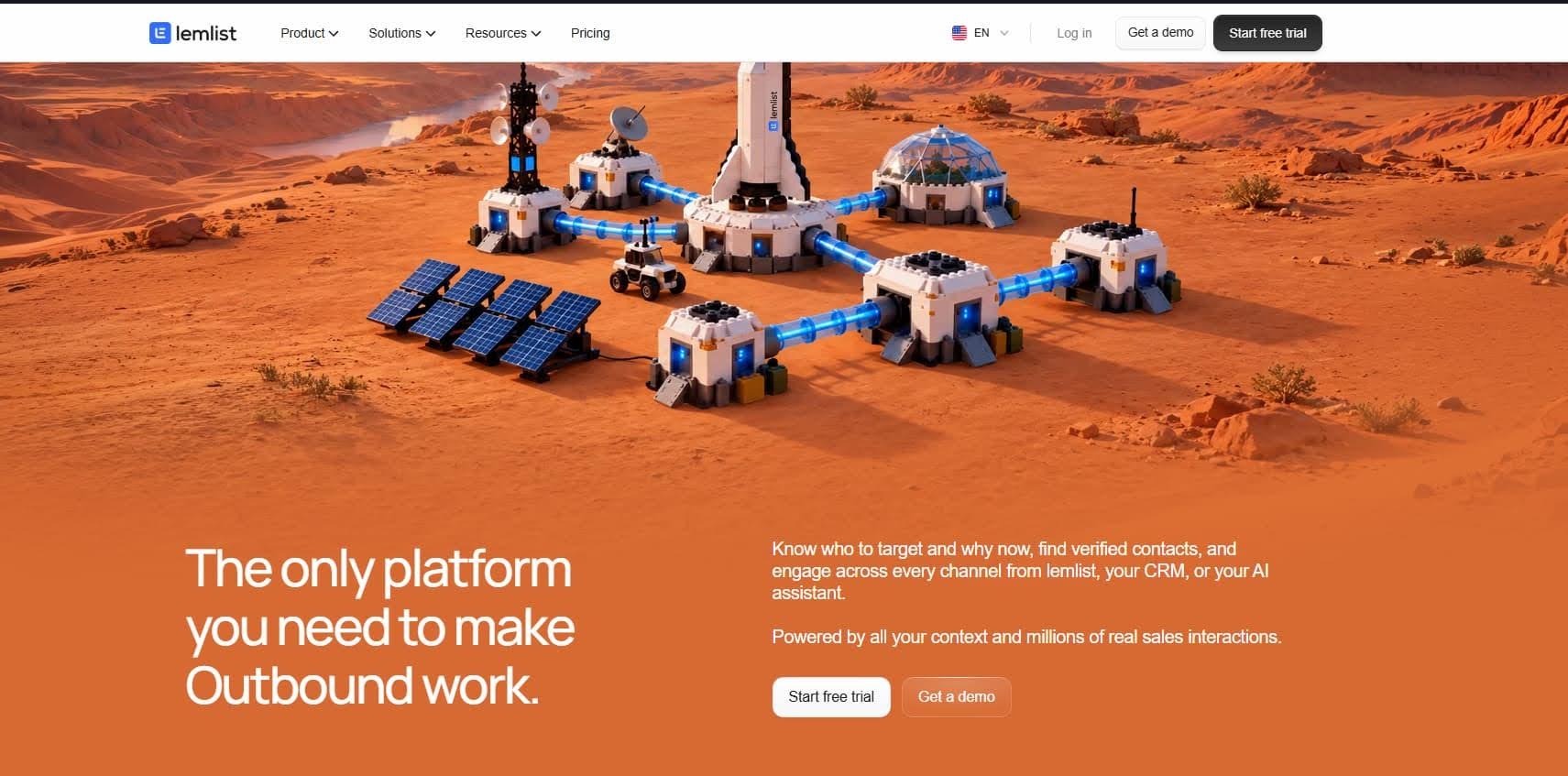
Campaigns support custom variables, conditional content through Liquid Syntax, AI-generated copy, prospect logos, website screenshots, and dynamic images tied to individual contact records.
Lemlist also provides controls for larger email campaigns through sending schedules, inbox rotation, mailbox and domain management, email warm-up, and guided SPF, DKIM, and DMARC setup.
Its Deliverability Hub monitors bounce rates, spam rates, inbox placement, mailbox health, and sending activity for connected domains, while daily sending limits and randomized delays distribute outbound volume throughout the day.
HubSpot, Salesforce, and Pipedrive integrations sync campaign activity with connected records, while the unified inbox brings email and other supported channel responses into the same workspace.
10. Recruiterflow
Recruiterflow is an ATS and CRM platform built for recruitment agencies, with sourcing, outreach, candidate management, and client management in the same system.
For bulk email recruiting, teams may add groups of candidates to a sequence through Advanced Search or the Candidate Inbox.
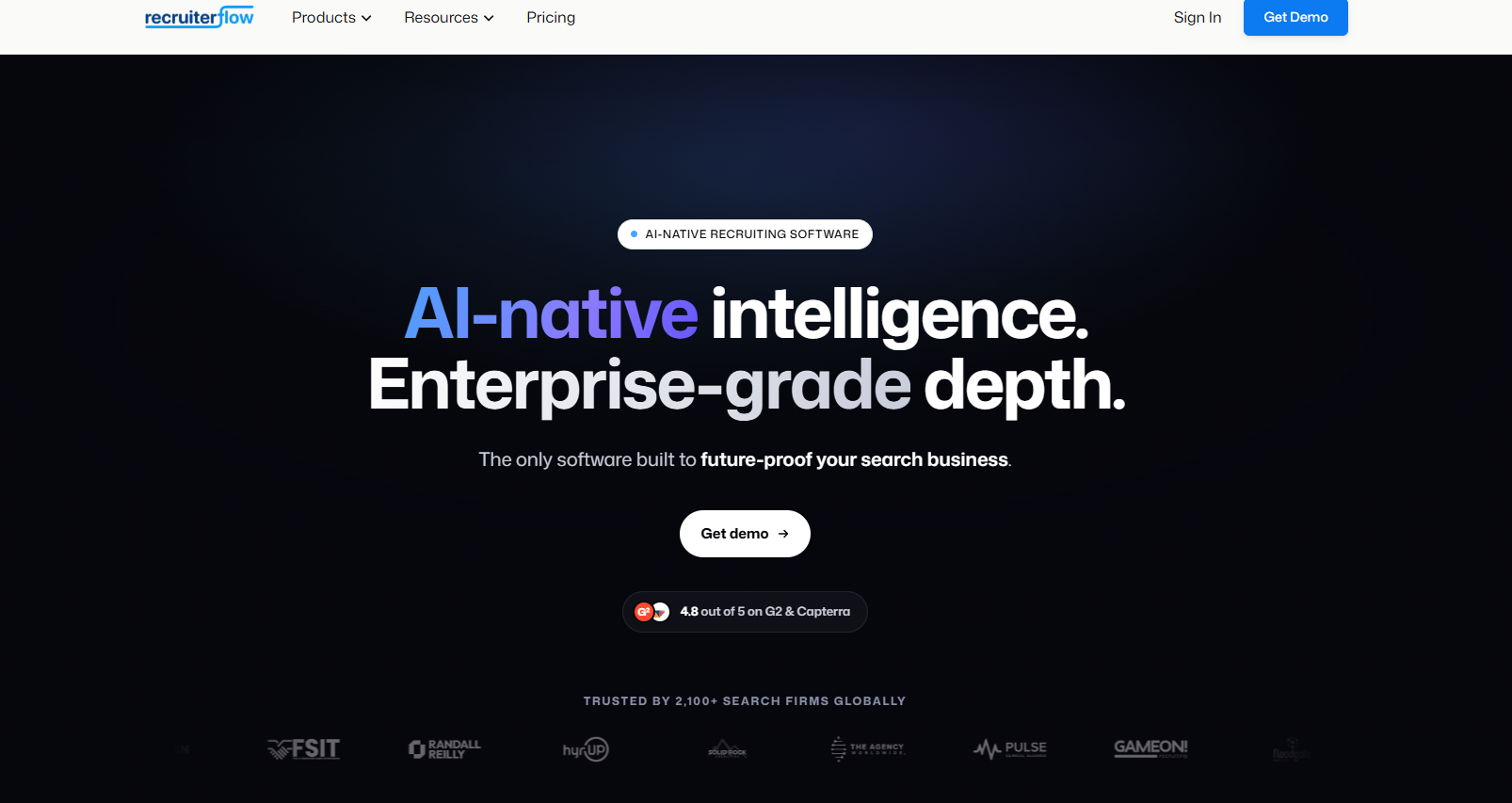
Email steps within a sequence may run automatically or remain manual for recruiter review before sending. It supports reusable templates, personalization tokens, fallback values, scheduled delays between steps, and follow-up emails threaded to previous messages.
Broader email outreach also has a dedicated Marketing Email step for announcements, newsletters, job alerts, and other large-audience communication.
Recruiterflow tracks opens, replies, and unsubscribes for marketing campaigns, while multiple-sender controls distribute campaign emails among team members. Smart sender assignment may prioritize a recruiter who previously received a reply from that recipient.
Its automation features also extend beyond email through conditional branches, scheduled tasks, SMS, and social outreach within the same sequence, depending on the plan and enabled features.
How to Choose the Best Bulk Email and Text Recruiting Platform
The right tool depends on where communication fits into your hiring process, which channels your recruiters already use, and how much outreach they manage.
Match the Tool to Your Main Communication Needs
The first step is identifying which type of communication your HR team needs to improve.
Email suits longer outreach, detailed role information, nurture campaigns, and messages that need more context. It also fits communication with active job seekers who may be reviewing several opportunities and need more information before responding.
Texting fits shorter, time-sensitive interactions such as screening questions, interview scheduling, reminders, and quick follow-ups. It also reduces reliance on phone calls when you only need a short response, confirmation, or scheduling update.
Some teams need both channels, while others already have email covered through an ATS or CRM. In that case, a dedicated mass texting service may fill the communication gap without replacing the systems already in place.
Review Candidate Segmentation and Personalization
Effective outreach depends on sending relevant messages to the right groups. Segmentation may use location, skills, availability, application stage, experience, or previous interest in specific roles.
You may also create separate groups for past candidates, new applicants, and qualified candidates who match current openings. These smaller audiences make it easier to personalize outreach around the role and the candidate’s position in the hiring journey.
Personalization should extend beyond adding a first name. Role details, location, previous interactions, and relevant job postings provide more context and make each message feel connected to the recipient.
Check How Candidate Records Stay Connected
Candidate communication should stay connected to your existing systems. A strong integration keeps messages, status updates, recruiter ownership, and other records tied to the broader recruiting process.
Data synchronization also reduces duplicate updates between tools. You need access to current application stages, contact history, role information, and prior outreach when they return to a candidate record.
Some platforms place communication and candidate records inside a single platform, while others connect with an ATS or CRM through native integrations or SMS APIs.
The better fit depends on where your hiring data already lives and how much information needs to move between systems.
Compare Automation and Follow-Up Controls
Automation reduces repetitive communication in outreach, screening, scheduling, and follow-up. Useful recruitment workflows may send interview reminders, status updates, or additional messages when a candidate has not responded.
The platform should also react to candidate activity instead of sending every message on a fixed schedule. A reply, completed application, stage change, or booked meeting can stop one sequence and trigger the next appropriate step.
Some tools let you schedule interviews, set delays between messages, and limit outreach to appropriate business hours without manual follow-up for every candidate.
Evaluate Collaboration Across Recruiters
Shared access becomes important when several recruiters manage the same candidate pool. Team visibility lets you see previous outreach, replies, and ownership before they continue texting candidates.
Conversation assignments also reduce overlap between recruiters. A specific owner for each reply prevents duplicate responses and keeps follow-up organized when several people work on the same roles.
A shared workspace also keeps recruiting communication out of a personal inbox. You have access to the same conversation history, which supports smoother handoffs to another team member.
Look at Reporting and Deliverability
Reporting should show more than how many messages were sent. Useful metrics include delivery rates, replies, clicks, bounces, unsubscribes, and campaign performance across different audiences.
Email tools should also provide visibility into deliverability factors such as bounce activity, spam complaints, mailbox health, and performance for different subject lines.
SMS marketing platforms have to track delivery, responses, opt-outs, and failed messages so recruiters see where outreach breaks down.
You may also need reports that connect communication activity with candidate data and later hiring stages. That connection makes it easier to see which campaigns generate responses, applications, interviews, and movement through the recruiting funnel.
Decide Whether You Need One System or Separate Tools
If your team needs broader sourcing and nurture, you can prioritize email capabilities.
If the bigger challenge is speed, reminders, re-engagement, or high-volume hiring, put more weight on SMS marketing features and response management.
If your ATS already supports strong email outreach, a separate texting product may be enough. If communication is fragmented between several tools, a broader platform reduces handoffs and simplifies recruiter workflows.
Finally, compare the tool against your actual hiring scenarios. If you recruit for frontline hiring, you'll benefit more from fast mobile outreach.
If you source specialized roles, you'll need stronger personalization, sequencing, and candidate research.
The right fit comes from matching the platform to your recruiting model rather than choosing the product with the longest feature list.
Make Candidate Texting Fit Your Existing Recruiting Stack With TextUs
Candidate interest fades fast when outreach sits unanswered for hours or days.
TextUs brings key features for text recruiting, including bulk SMS, two-way conversations, automation, and recruiter collaboration into one compliant platform.
It supports staffing agencies that manage large candidate databases, multiple recruiters, and frequent hiring activity. Campaigns, replies, assignments, and follow-up activity stay organized instead of spreading across personal devices and separate messaging tools.
TextUs also includes SMS compliance features that support consent management, opt-in/outs, 10DLC registration, and business messaging requirements as your program grows.
Unlimited campaign sizes also support recruiting use cases where you have high-volume staffing needs. This lets you reach candidates at different points in the journey, from initial sourcing and re-engagement to screening and interview confirmations.
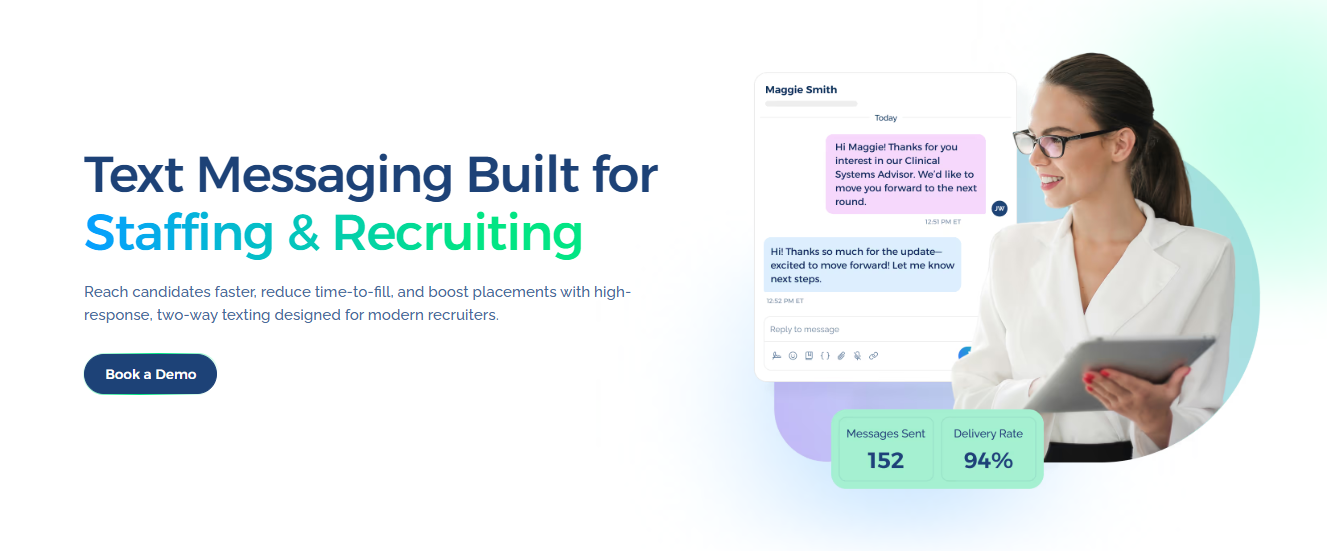
If your hiring strategy depends on reaching more candidates without losing the human conversation behind each response, book a demo with TextUs today!
FAQs About Bulk Email And Text Recruiting Tools
What are some good tools for bulk emailing?
Gem, SourceWhale, Mailmeteor, Lemlist, and Recruiterflow all support bulk email outreach with different levels of personalization, automation, and reporting.
You may personalize campaigns by job title, candidate information, or openings promoted through job boards.
What is the best bulk SMS software?
The best bulk SMS software depends on your messaging volume, integrations, automation needs, and compliance requirements.
TextUs is a strong option when texting plays a central role in candidate outreach and recruiter follow-up. It lets you send interview invites, schedule candidates, and manage follow-up across high-volume recruiting workflows.
What is the best texting app for recruiting?
The best texting app for recruiting should move with you throughout the day.
TextUs supports that with a mobile app for conversations on the go, a Chrome extension for texting while you work inside your ATS, and a web app for managing campaigns and team activity.
How to send 2000 emails at one time?
A bulk email platform lets you upload a contact list, personalize messages, and distribute a large campaign.
But if email and recruiting records already live in the same platform, check its sending limits, unsubscribe controls, and bulk campaign features before launching the list. Sending capacity varies by provider, plan, account history, and sender reputation.
Continue Reading



Frequently Asked Questions
Business Texting
Built for Results
Create and convert pipeline at scale through industry leading SMS software